Rising Memory Prices Threaten Gaming Hardware as Steam Machine Supply Problems Expose a Wider Industry Challenge
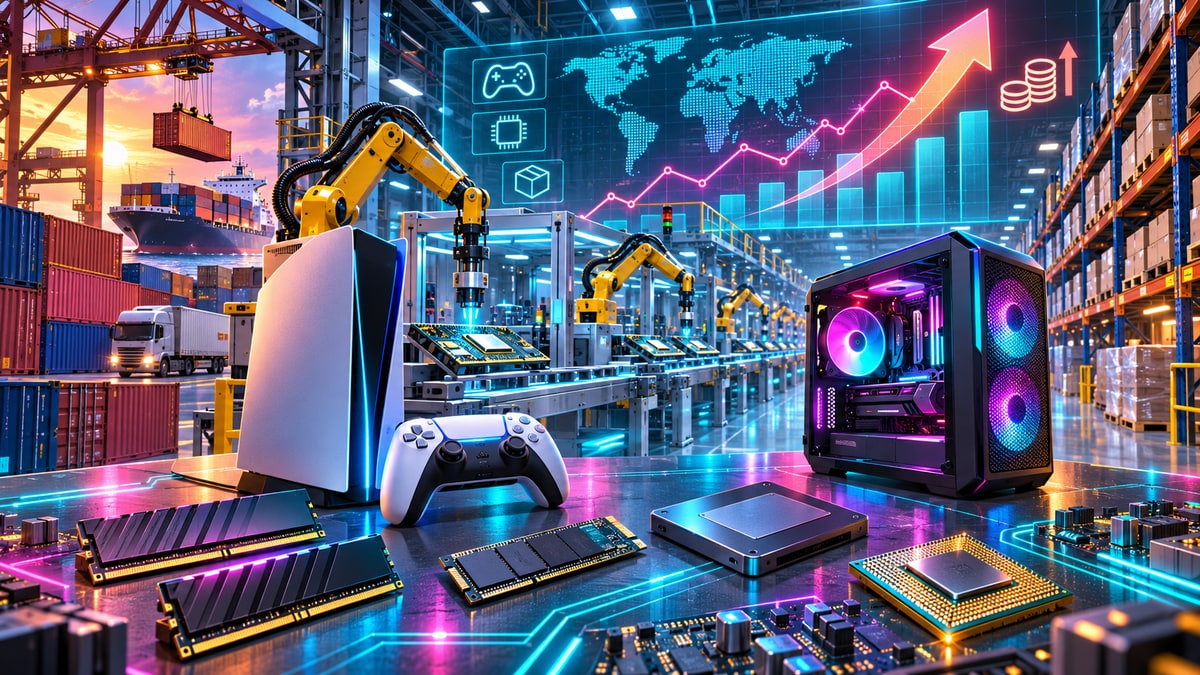
The videogame industry's latest hardware challenge has relatively little to do with graphics performance, processing power or the endless debate about whether consoles are becoming too similar to PCs. The problem is considerably more fundamental: memory and storage are becoming expensive enough to disrupt production planning.
Key Facts: Gaming Hardware Supply & Memory Cost Pressures
- Immediate Impact: Valve closed the 2TB Steam Machine waitlist and flagged uncertain future production volumes and pricing - Entry Price Sensitivity: The 512GB Steam Machine already starts at $1,049 in the US, well above traditional consoles - Root Cause: Competition for DRAM and NAND flash from data centres and artificial intelligence infrastructure - Affected Categories: Future console revisions, handheld gaming PCs, gaming laptops, and prebuilt systems - Clarification: Valve has not confirmed a specific retail price hike for its next production batch
Steam Machine Waitlist Highlights Component Squeeze
Valve's latest Steam Machine announcement illustrates the difficulty. Although customers can now purchase the 512GB model directly while inventory remains available, the 2TB version is constrained by demand that exceeds the company's current manufacturing capacity. Valve has stopped accepting new waitlist registrations for the larger model and acknowledges that future production quantities and retail prices remain uncertain.
The situation reflects pressure across the wider electronics supply chain. Modern gaming systems depend on increasingly capable processors, substantial memory allocations and high-performance solid-state storage. Those components are also required by data centres, artificial intelligence infrastructure and a broad range of other technology industries. When demand increases faster than manufacturing capacity, consumer hardware companies face an uncomfortable set of choices. They can raise prices, absorb higher costs and accept smaller margins, reduce production volumes or redesign products around more readily available components. None is particularly attractive when customers already regard modern gaming equipment as expensive.
Future Consoles and Handhelds Face Tough Pricing Choices
The Steam Machine is especially vulnerable because its starting price of $1,049 places it above traditional mass-market consoles. Further increases could make the proposition difficult for consumers who value the convenience of dedicated gaming hardware. Similar challenges could influence future console revisions, handheld computers and gaming laptops, particularly if component prices remain elevated.
However, Valve has not confirmed a specific price increase for its next production batch. The distinction matters because uncertainty should not be confused with an announced retail change. Manufacturers are attempting to forecast future supply conditions in an unusually competitive technology market. The result is a reminder that videogame hardware development does not exist in isolation. An industry that spends years debating whether a console can achieve sixty frames per second may increasingly find itself confronting a simpler question: can customers afford the machine required to run the game in the first place?
Dominions 5: Warriors of the Faith
GFA STRONG
Europa Universalis IV
GFA GREAT
Ravenfield
GFA GREAT
The GFA 5-Department Shop Is Live
Reviewed Steam keys, DRM-free Windows games with free browser demos, boxed physical games, official merch, and gaming hardware.
Explore All 5 Departments