Marupoyo: The Round Chick's Adventure Review – Who Needs Legs When You Have Gravity and Questionable Braking Skills?
 GFA METERSTRONG
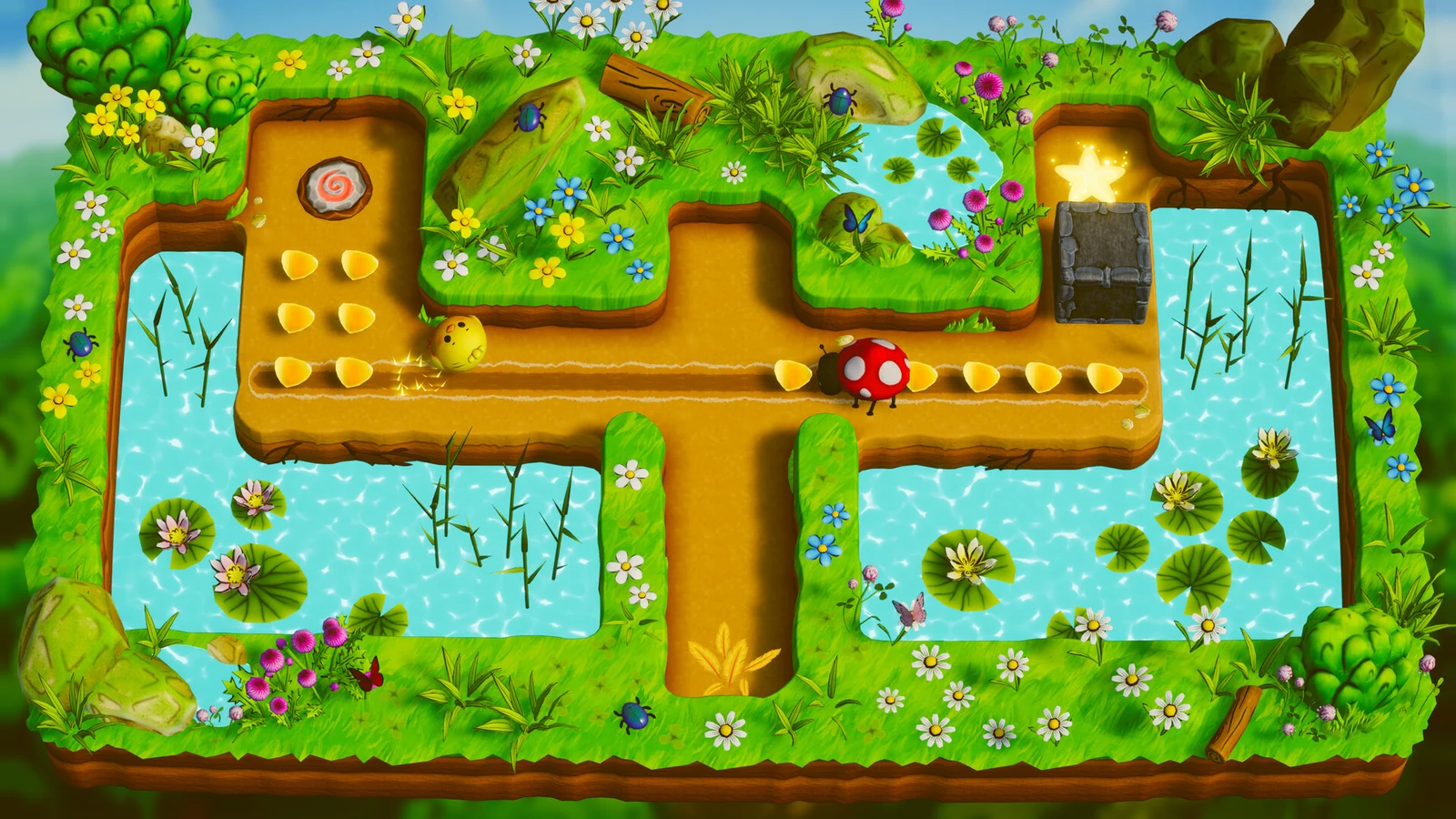
GFA METER: 83% — STRONG
Developer: Casual Brothers Ltd.
Publisher: Casual Brothers Ltd.
Platforms: [PC](/platforms/pc), [PlayStation 4](/platforms/playstation-4), [PlayStation 5](/platforms/playstation-5), [Xbox Series X/S](/platforms/xbox-series), [Nintendo Switch](/platforms/nintendo-switch), [Nintendo Switch 2](/platforms/nintendo-switch-2)
Genre: Physics-Based Puzzle Platformer
Release Date: November 26, 2026
Players: Single-player
The video game industry has given us some rather peculiar protagonists over the years. We've had an Italian plumber with an unhealthy obsession with mushrooms, a blue hedgehog with a complete disregard for speed limits, a pink vacuum cleaner with an eating disorder and a yellow circular creature that spends its entire existence eating dots while being pursued by the deceased. Clearly, the qualifications required to become a video game hero are somewhat different from those required to become a regional sales manager.
Enter Marupoyo, a chicken so spectacularly round that walking is apparently beyond his physical capabilities. While other chickens spend their days scratching around, laying eggs and generally contemplating their position in the food chain, Marupoyo has discovered that his unusual physique makes him exceptionally well suited to rolling. It is an unfortunate biological development that turns out to be a rather excellent video game mechanic.
Developed and published by Casual Brothers Ltd., Marupoyo: The Round Chick's Adventure arrived on November 26, 2026, across virtually every major gaming platform. It is a colourful physics-based puzzle platformer featuring 120 levels, an adorable protagonist and enough opportunities to make gravity your sworn enemy. More importantly, it is the sort of game that reminds us that not every new release needs an enormous open world, seventeen different currencies and a battle pass featuring limited-edition chicken trousers.
Houston, We Have a Chicken
The story begins with our unusually spherical feathered friend experiencing something of a family emergency. A tornado has scattered his siblings across the kingdom, leaving Marupoyo with the unenviable responsibility of collecting them. Under the guidance of the Queen of Nature, he embarks on a rescue mission that takes him through a succession of increasingly hazardous environments.
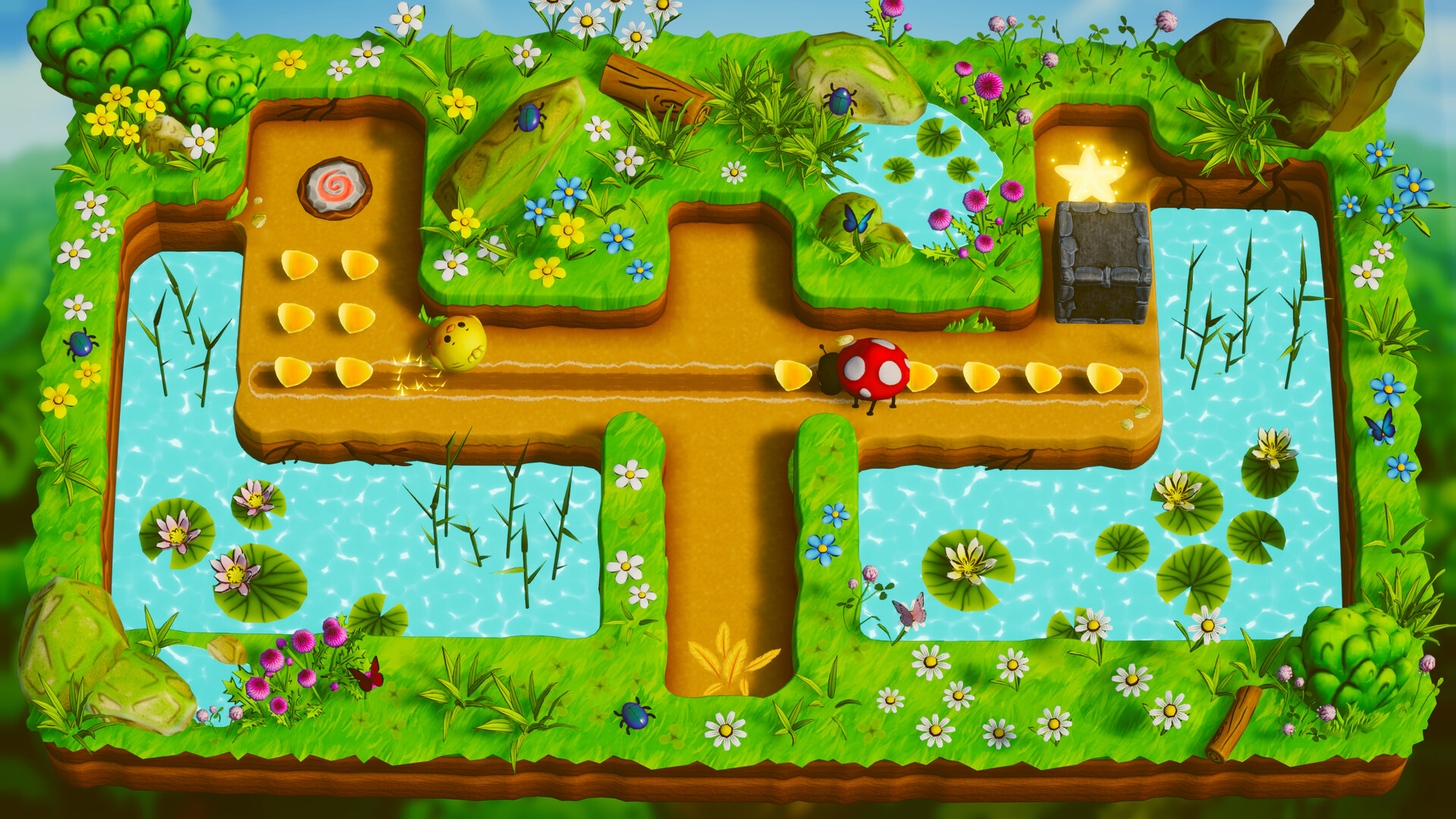
Considering that chickens aren't generally renowned for their crisis management capabilities, Marupoyo approaches the situation with admirable determination. Unfortunately, his inability to walk means that getting anywhere requires a rather unconventional solution. Instead of directly controlling the protagonist, players manipulate the environment around him, tilting the landscape and allowing gravity to send him rolling in the desired direction.
Anyone old enough to remember Marble Madness will immediately recognise the appeal, while Sega's Super Monkey Ball remains the more obvious modern comparison. There are also shades of those wooden labyrinth toys with the little metal ball that grandparents used to give children, presumably because watching a seven-year-old slowly develop anger management issues was considerably cheaper than buying a Nintendo.
The principle is remarkably straightforward. Tilt the landscape, build momentum, negotiate obstacles and avoid sending your chicken into somewhere that might result in him becoming dinner. Actually doing all of that with any degree of competence, however, is where things become considerably more interesting.
Gravity: A Wonderful Concept Until You Have to Rely on It
The beauty of momentum-based platforming lies in the enormous difference between understanding what you need to do and possessing the necessary skills to actually do it. Sending Marupoyo towards a ramp is simple enough. Sending him towards that ramp at precisely the right speed, in precisely the right direction, without subsequently launching him into a geological feature that will bring his family reunion to a premature conclusion is an entirely different matter.
The various surfaces introduce their own complications. Ice makes slowing down considerably more difficult, water currents interfere with your intended direction, while springy mushrooms introduce an additional element of aerial uncertainty. There are moving enemies, narrow pathways, holes, lava and assorted environmental hazards, all apparently united in their determination to reduce the local poultry population.
This is where Marupoyo's central mechanic earns its keep. Rather than relying on increasingly complicated combinations of buttons, the game concentrates on timing, positioning and anticipation. Taking a corner too aggressively can be just as problematic as approaching an obstacle too cautiously, and the difference between success and failure often comes down to how well you understand the momentum of your little yellow passenger.
It is a refreshingly traditional approach to game design. Instead of giving the protagonist increasingly powerful abilities, the game encourages the player to become better. There is no legendary chicken armour, no experience-point farming and no opportunity to purchase a premium gravity resistance package for €14.99. The responsibility rests with your own ability to guide a round object across an inconveniently designed landscape, which is exactly how this particular genre should work.

One Hundred and Twenty Levels of Poultry-Based Occupational Hazards
Casual Brothers has included a substantial 120 levels across four distinctly themed worlds, taking Marupoyo through forests, frozen landscapes, deserts and volcanic environments. Whoever was responsible for scattering this particular family clearly wasn't interested in making the recovery operation particularly convenient.
The variety of environments is important because changing the scenery alone would never be enough to sustain a game built around one primary mechanic. Different surfaces, obstacles and environmental conditions help alter the way players approach each course, requiring adjustments to speed and direction rather than simply repeating the same process against a differently coloured background.
There is also considerably more to do than reach the finish line. Corn can be collected throughout the stages, hidden routes reward curiosity, and missing siblings provide an additional incentive to explore. Rescued family members return to the hometown, where collected corn can be used to develop your relationships with them. Apparently, the secret to maintaining a healthy family dynamic is simply providing everyone with sufficient carbohydrates.
Additional challenges encourage players to complete stages within target times, avoid losing lives and, for those possessing a particularly questionable relationship with personal safety, attempt to finish without using the brakes. The latter is essentially the chicken equivalent of giving your teenage nephew the keys to a Ferrari and telling him that the middle pedal is optional.
These objectives provide the game with a welcome degree of replayability. Completing a level is one thing, but completing it efficiently while collecting everything and rescuing the appropriate family members is another. For completionists, there is plenty here to encourage another attempt long after the basic objective has been achieved.
The potential downside is repetition. One hundred and twenty levels is a generous amount of content, but it is also a considerable number of opportunities to perform variations of the same activity. Even the most enthusiastic chicken transportation specialist may occasionally find that a shorter session is more enjoyable than attempting to complete the entire adventure in one sitting.
Family Mode, or How to Avoid Explaining the Concept of Death to Your Children
One of the game's most thoughtful features is its approach to difficulty. Rather than simply giving players more lives or adjusting a handful of numbers, Marupoyo offers two distinct ways to experience the adventure through Family Mode and Gamer Mode.
Family Mode makes the experience considerably more forgiving, reducing the danger associated with certain hazards and providing protective, bouncy clouds over otherwise problematic areas. This means that younger players can experiment with the movement system without constantly being reminded that gravity is an exceptionally efficient method of introducing disappointment into their lives.
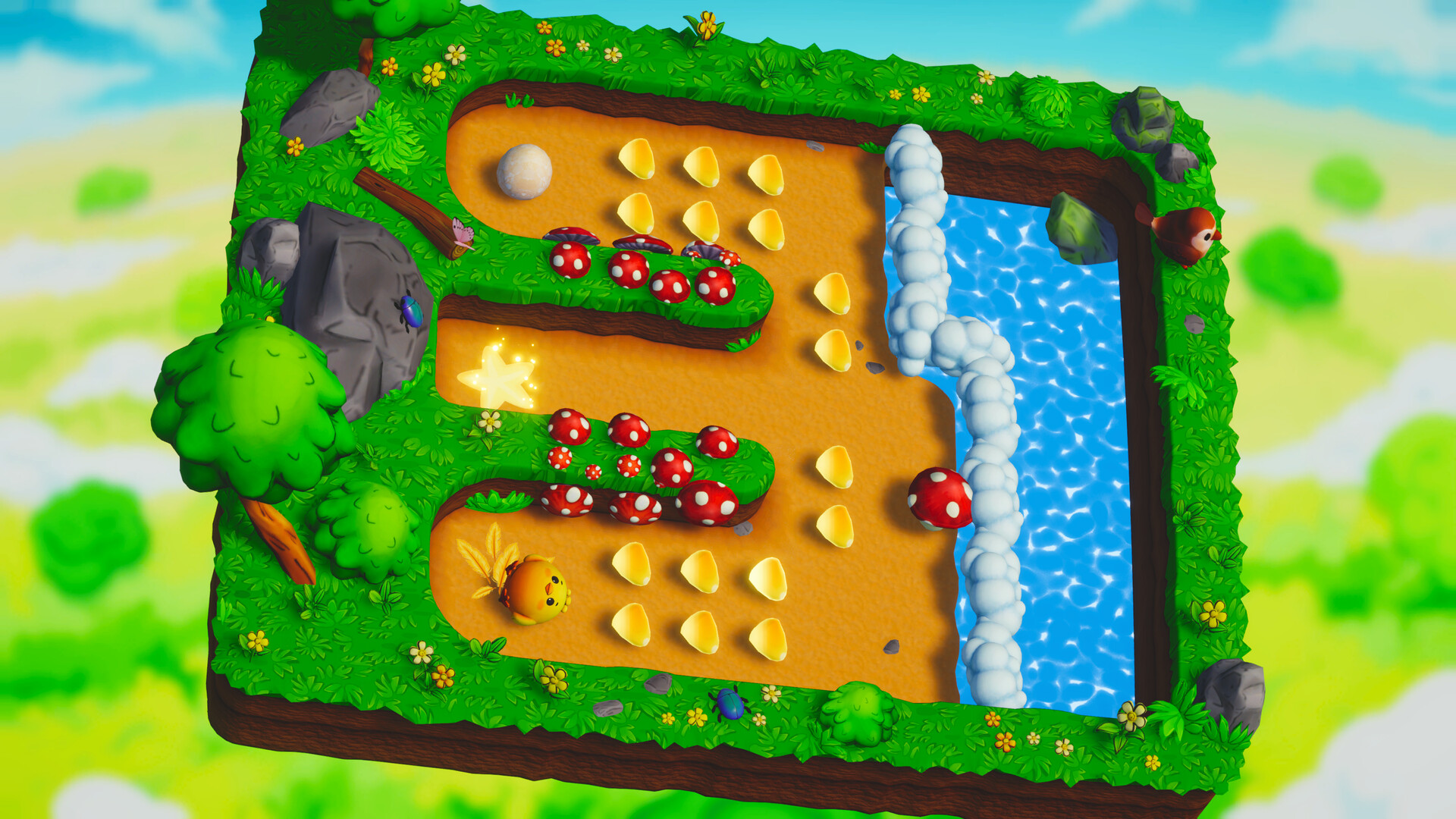
Gamer Mode, meanwhile, increases the pace and introduces more demanding obstacles. Players are encouraged to master the mechanics, improve their completion times and pursue additional achievements. It is a sensible way of making the same adventure appealing to both children and experienced gamers without requiring either group to make significant compromises.
There is something particularly refreshing about this approach. Too many family-oriented games assume that adults possess approximately the same attention span and mechanical competence as a mildly distracted Labrador, while some supposedly accessible games simply remove any meaningful challenge. Marupoyo's difficulty options recognise that different players can enjoy the same fundamental concept at different levels of intensity.
It should be noted that this is a single-player game rather than a simultaneous cooperative adventure. Families can certainly take turns, although this may introduce the traditional household gaming dispute over whether Dad's unsuccessful attempt to rescue a chicken constitutes sufficient grounds for immediately passing the controller to somebody more competent.
Graphics: Fifty Shades of Adorable
Visually, Marupoyo adopts the cheerful, colourful style that has served family-friendly platformers particularly well over the years. Its protagonist possesses the sort of immediate visual appeal that doesn't require an elaborate cinematic introduction, a tragic childhood flashback or three hours of downloadable lore to explain why players should care about him.
The environments provide a pleasant contrast between lush natural surroundings, icy terrain, sandy landscapes and considerably less chicken-friendly volcanic regions. The art direction prioritises clarity, which is particularly important in a game where recognising hazards and judging distances are fundamental to avoiding disaster.
Marupoyo is not attempting to compete with the technical achievements of modern blockbuster productions, and there is absolutely nothing wrong with that. Nobody needs individual ray-traced feathers rendered at 120 frames per second to appreciate the spectacle of a terrified chicken rolling towards a cliff. In fact, a clear and uncomplicated visual presentation is considerably more useful here than an expensive collection of graphical effects that make it impossible to see where you're going.
The motion-sickness accessibility setting is also a welcome addition. Players can disable the visible tilting of the floor, potentially making the experience more comfortable for those susceptible to motion-related dizziness. Considering that the fundamental premise involves constantly adjusting the angle of the world, this is a particularly sensible inclusion.
The overall presentation has a distinct identity and an appealing warmth, although its environments and visual effects remain relatively modest compared with the larger productions occupying the platforming genre.

Sound: The Hills Are Alive With the Sound of Chicken
The audio presentation has an interesting role to fulfil. A game built around repeated attempts, momentum and precision needs sound that complements the experience without becoming irritating every time the protagonist collides with something he probably shouldn't have collided with.
Marupoyo includes collectible music tracks hidden throughout its environments, which is a pleasant little incentive for players who appreciate discovering more than the usual assortment of coins, vegetables and inexplicably floating objects. Separate adjustments for music, voices and effects provide additional flexibility, particularly useful when younger family members have developed an enthusiastic relationship with the volume button.
The musical approach suits the game's cheerful personality on paper, although there is currently less independent evidence about the soundtrack's quality and long-term variety than about its visual presentation and gameplay. Consequently, the sound rating remains the more tentative element of this assessment.
At least there is no indication that Casual Brothers has attempted to improve the emotional intensity of the adventure by hiring a forty-piece orchestra to perform an epic composition every time a chicken encounters a mushroom. Some restraint in video game production remains a wonderful thing.
A Particularly Good Fit for Nintendo Switch
Although Marupoyo is available across six platforms, the concept feels particularly well suited to Nintendo's portable systems. The [Nintendo Switch](/platforms/nintendo-switch) and [Nintendo Switch 2](/platforms/nintendo-switch-2) versions support conventional controls and motion controls, giving players the option of physically tilting their controllers while attempting to keep their spherical companion out of trouble.
Anyone who has ever watched somebody play a racing game while instinctively leaning their entire body into every corner will appreciate the potential entertainment value here. It is essentially an opportunity to turn the family sofa into a low-budget flight simulator, except that the aircraft is a chicken and the pilot probably hasn't received appropriate certification.
The relatively compact stages also lend themselves to short gaming sessions, making Marupoyo an attractive proposition for handheld play. A few levels during a commute, a lunch break or an evening on the sofa seem more natural than demanding an uninterrupted commitment of several hours.
[PC](/platforms/pc) players can download a free demo through [Steam](https://store.steampowered.com/app/4355110/), which is especially welcome because the enjoyment of physics-based platformers often comes down to whether their particular movement system appeals to the individual player. The demo provides an opportunity to investigate that before making a purchase.
The broad multiplatform release is commendable for a smaller independent production, although performance and control responsiveness on every individual platform would require separate hands-on testing.
Is It Worth Shelling Out For?
Marupoyo's modest asking price makes it a particularly attractive proposition in a market where purchasing the deluxe edition of a major release increasingly requires a conversation with your financial adviser. The Steam edition also launched with a 15% introductory discount running until December 10, 2026, making an already affordable game slightly more affordable still.
What Casual Brothers offers is a refreshingly focused entertainment package built around a recognisable idea, a substantial collection of levels and an accessible character. The inclusion of additional objectives, difficulty options and collectibles helps give it more longevity than a straightforward collection of obstacle courses might otherwise possess.
Its greatest weakness is also fairly obvious. The central concept is familiar territory. Anyone who has spent considerable time playing Super Monkey Ball or other momentum-based arcade games is unlikely to discover anything that fundamentally changes their understanding of the genre. The game also lacks cooperative multiplayer, which might have been a particularly entertaining addition given its family-oriented presentation.
Nevertheless, originality is not the only ingredient required to make an entertaining video game. Executing a familiar idea with personality, thoughtful design and sufficient variety is often considerably more valuable than inventing something completely new that nobody actually enjoys playing.
The GameForceAsia Verdict
Marupoyo: The Round Chick's Adventure represents the sort of independent gaming release that deserves attention precisely because it doesn't spend its time trying to be something it isn't. It is an approachable physics-based platformer with an appealing protagonist, a generous selection of levels and enough additional challenges to keep enthusiastic players occupied well beyond the initial family rescue operation.
Its difficulty options are particularly commendable, giving younger audiences an opportunity to enjoy the experience while still providing meaningful challenges for those who approach gaming with the competitive determination of somebody attempting to qualify for the Chicken Rolling World Championships. Its colourful presentation is pleasant, the central gameplay concept has proven appeal, and the relatively low price makes it easy to recommend exploring the free demo.
The familiar formula and potential repetition prevent it from entering the upper reaches of the GFA Meter. Its audio presentation and technical performance across platforms also deserve further assessment before any definitive hands-on verdict.
Still, in an industry increasingly dominated by enormous budgets, complicated monetisation strategies and games that occasionally feel like unpaid administrative positions, there is something enormously appealing about an adventure that simply asks you to roll a chicken towards its family.
Marupoyo may not have legs capable of winning an Olympic sprint, but he certainly has enough personality to carry his own video game. Casual Brothers hasn't reinvented the wheel with this one, although considering the physical dimensions of its protagonist, reinventing the wheel would probably constitute a rather serious identity crisis anyway.
A charming, affordable little adventure that proves you don't necessarily need to stand on your own two feet to get somewhere in life.
Sometimes, you just need to roll with it.
GameForceAsia Score
| Category | Score |
|---|---|
| Graphics | 85% |
| Sound | 76% |
| Gameplay | 86% |
| Fun Factor | 85% |
| Overall GFA Meter | 83% — STRONG |
GFA Verdict: A delightful family-friendly physics platformer with an adorable protagonist, substantial content, thoughtful accessibility features and an entertaining momentum-based gameplay concept. Its familiar mechanics and potential repetition hold it back slightly, but Marupoyo offers an appealing alternative to the increasingly expensive blockbuster gaming experience.
Buy the game or download the free demo: [Marupoyo: The Round Chick's Adventure on Steam](https://store.steampowered.com/app/4355110/)
For more [game reviews](/reviews), indie game discoveries, and the [latest gaming news](/news), visit [GameForceAsia](https://www.gameforceasia.com).
Review basis: Research-based editorial assessment informed by official game materials, platform listings and independent release-day coverage. Scores are provisional pending direct hands-on testing.
Screenshots
Shop 2.0
The GFA 5-Department Shop Is Live
Reviewed Steam keys, DRM-free Windows games with free browser demos, boxed physical games, official merch, and gaming hardware.
Explore All 5 Departments