Neko Michi
 GFA METERSTRONG
Cats have finally taken over urban planning, which explains a lot.
**Neko Michi** is a cozy management game set in **Meiji-era Japan** where you restore and develop a small street populated entirely by cats. You build shops, adjust prices, manage materials, customize buildings, and somehow maintain peace between traditionalists and modern-minded residents. In other words, it is municipal government, except everyone has whiskers and presumably pushes important documents off the desk when negotiations go badly.
The idea is immediately charming. Rather than giving you another enormous city to optimize until your brain starts producing Excel formulas in your sleep, Neko Michi keeps things deliberately small. You are developing a street, not founding Tokyo. Progression is divided into chapters that unlock new buildings inspired by both traditional and increasingly modern Meiji architecture, so the settlement gradually changes alongside the historical theme.
That scale suits the game exceptionally well. Watching a handful of buildings slowly become a busy little commercial district gives each addition more personality than dropping Residential Zone #847 into a giant city-builder.
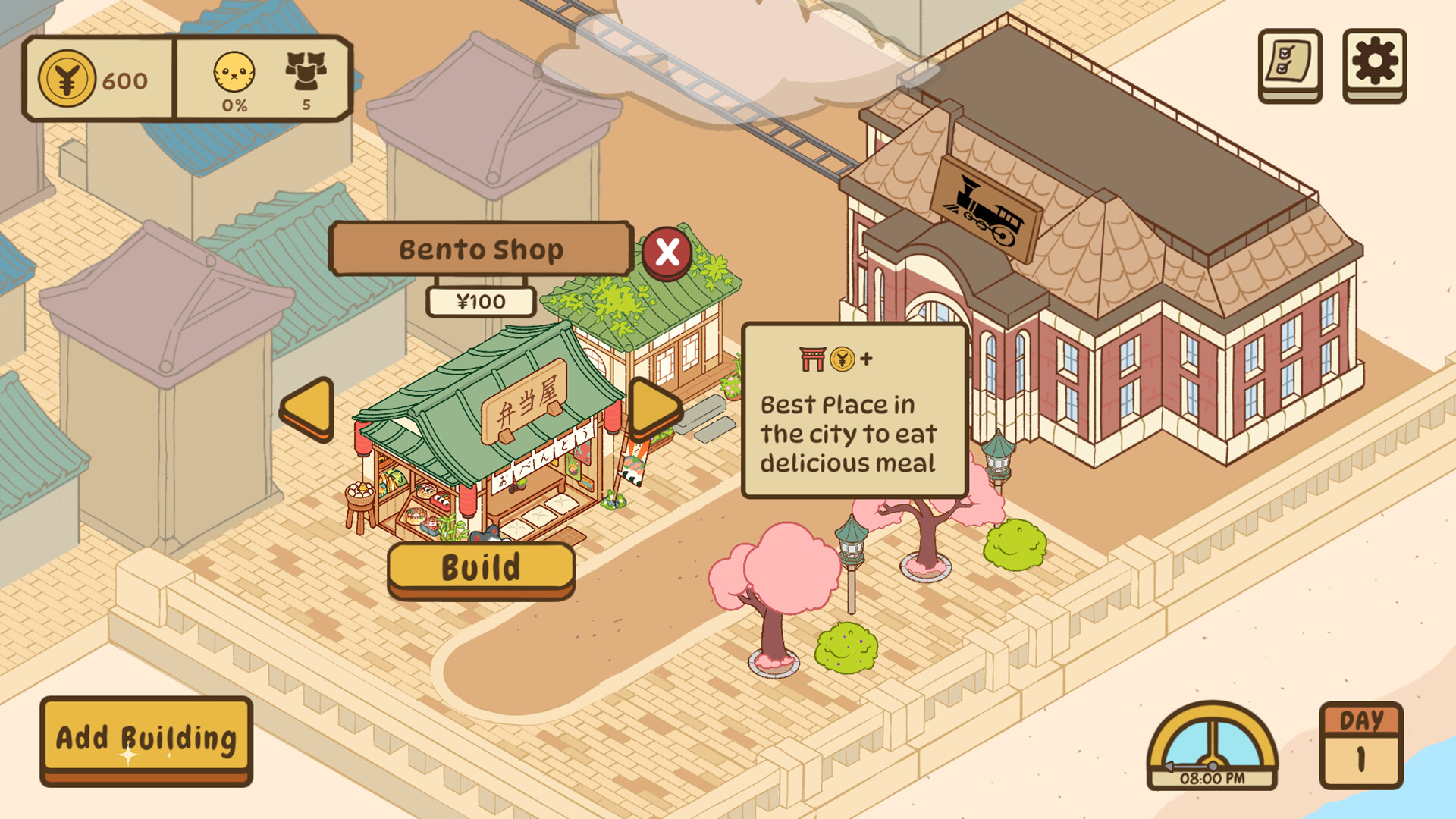
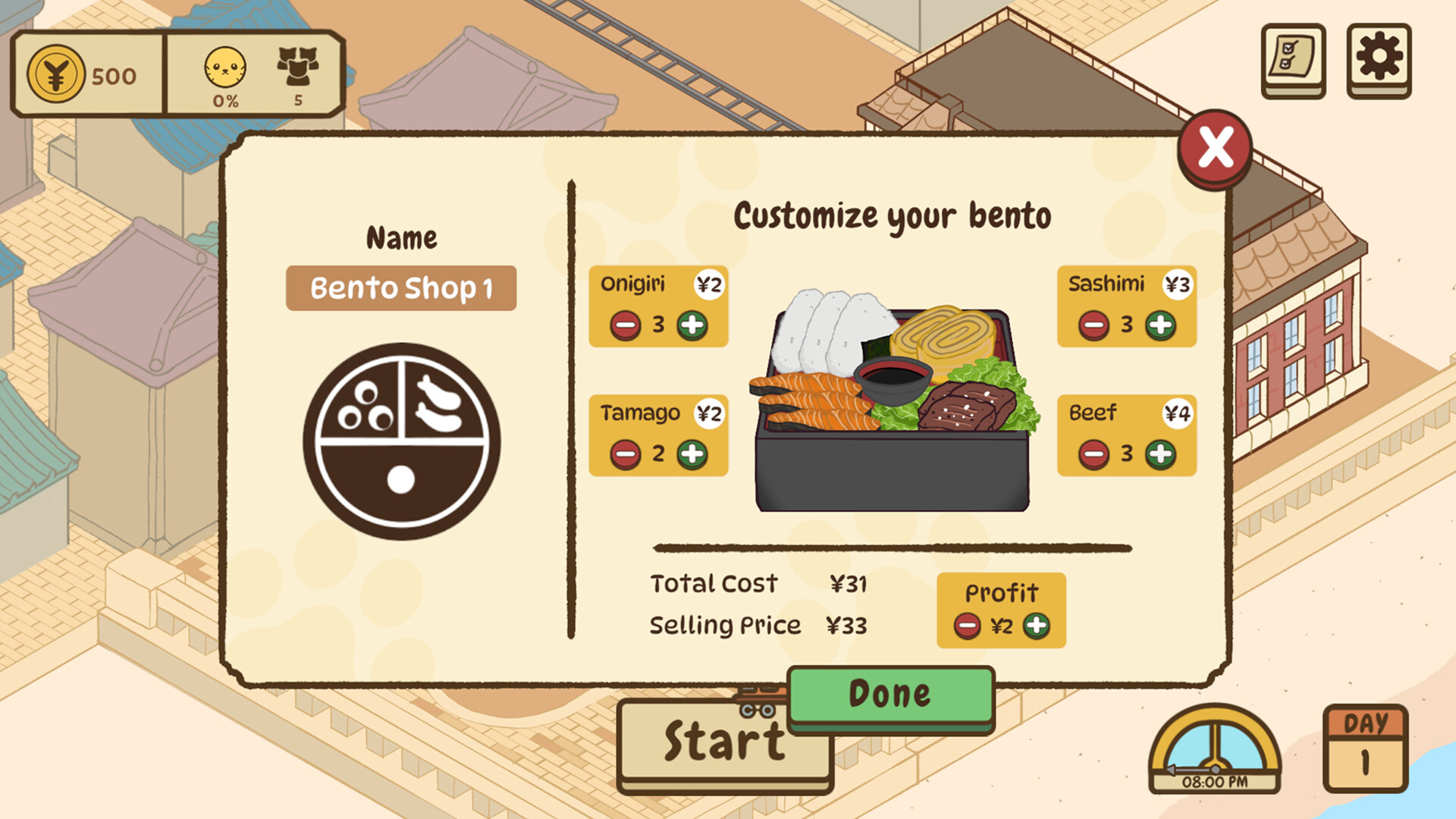
There is more management underneath all the fur than the screenshots initially suggest. Shops need materials, prices have to make sense, and customers have needs that affect whether businesses remain profitable. You therefore cannot simply construct the cutest possible tea shop and declare yourself Emperor of Cats. Well, you *can*, but bankruptcy apparently remains a problem even when your citizens are adorable.
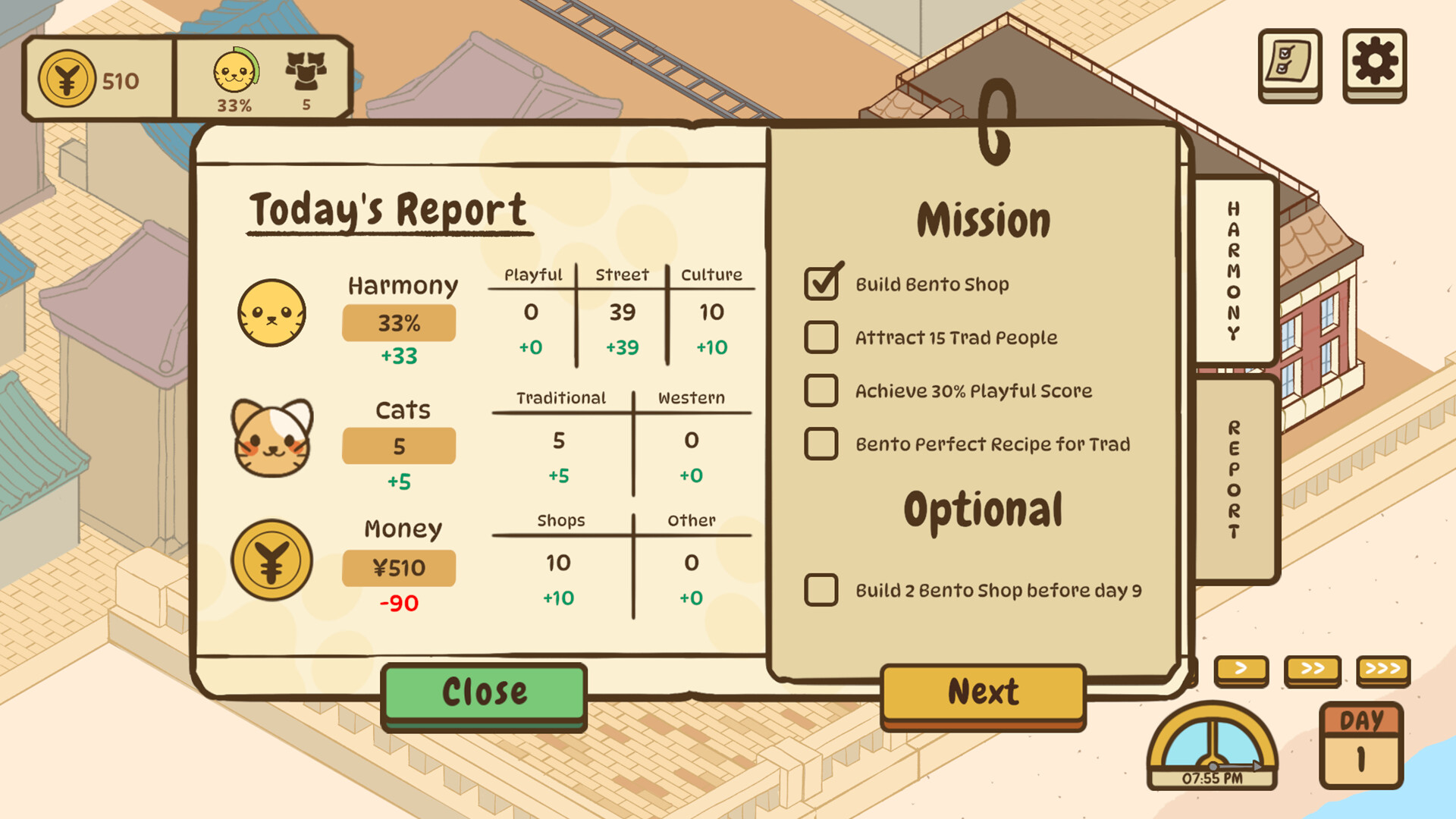
The most interesting system is the tension between **traditional and modern feline villagers**. Your job includes maintaining harmony between these groups while developing the street. It is a clever thematic fit for the Meiji period, when Japan was undergoing enormous social and technological change. Neko Michi reduces that huge historical transformation to something cozy and digestible: one cat wants tradition preserved, another presumably wants electricity immediately, and you are standing between them wondering whether changing the color of the noodle shop will prevent civil unrest.
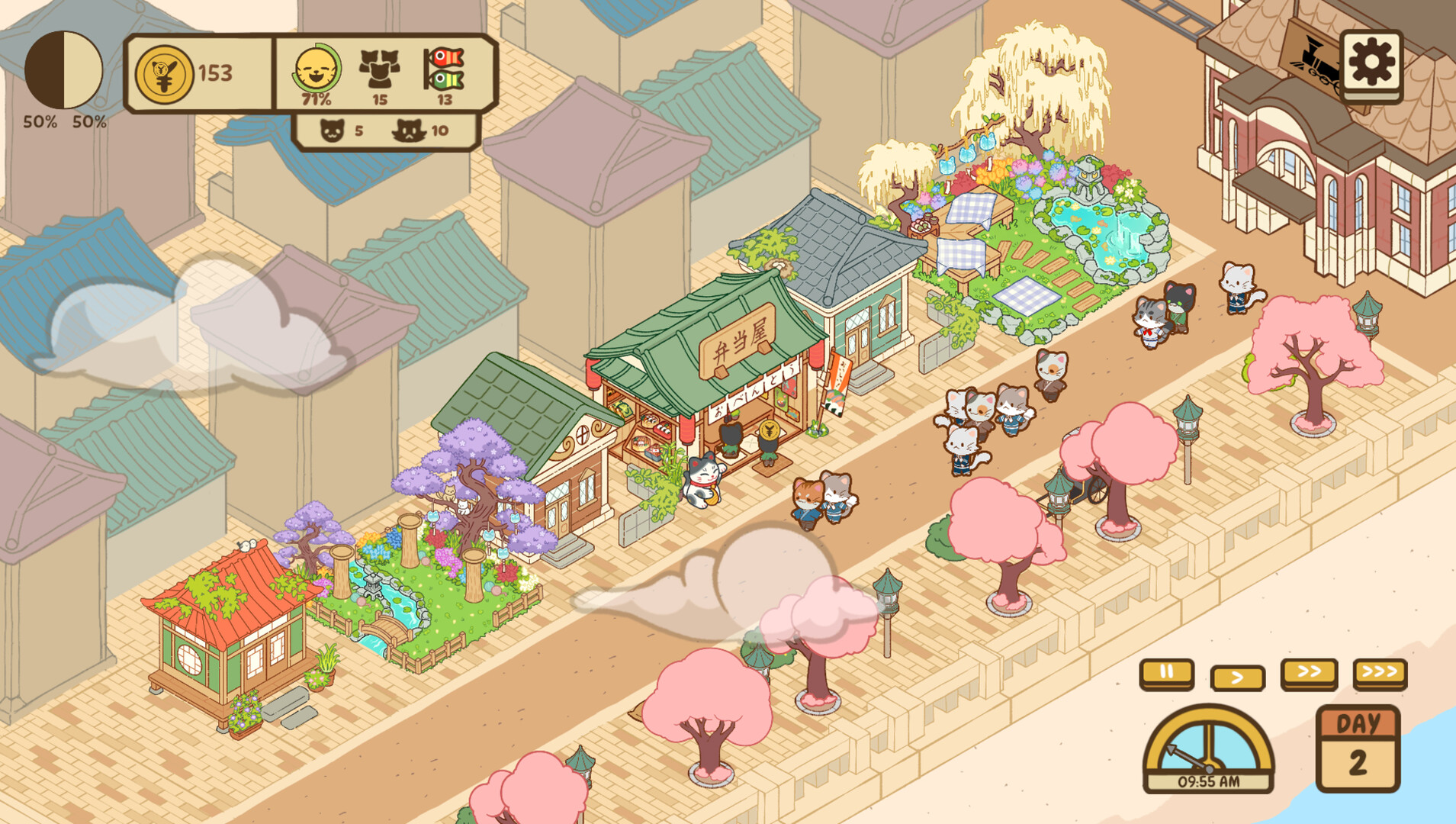
Customization is another strong point. Buildings can be altered in **color, shape and design**, allowing your street to develop its own visual character instead of forcing everyone into the same predetermined village. Combined with the hand-drawn, isometric presentation, this produces a game that is almost dangerously cute. There is a strong “I am only going to fix this one building” quality to it, followed forty minutes later by intense concern about whether a digital cat has enough customers.
The art direction is arguably Neko Michi's biggest success. It is colorful without becoming visually exhausting, and the small-scale environments make the street feel like a miniature model that somebody accidentally populated with sentient shopkeepers. This is exactly the type of cozy game where screenshots do half the marketing because everything appears designed to trigger the part of your brain responsible for saying, “Aww.”
But an honest review also has to acknowledge that **Neko Michi is a fairly lightweight management game**.
If you are expecting deep production chains, sophisticated economic modeling, complex staffing, logistics networks, or the kind of financial simulation where a 0.4% change in grain prices destroys your empire, this is not that game. Its systems are approachable rather than hardcore. Once you understand the relationship between materials, pricing, buildings and customer demand, the management can become predictable.
The chapter-based progression helps, but Neko Michi gets most of its mileage from atmosphere, customization and the pleasant rhythm of gradual expansion rather than constantly introducing radically new mechanics. Players who need frequent surprises may eventually feel that they are performing variations of the same comfortable routine.
There is also not a huge amount of community evidence yet. Neko Michi launched on **16 July 2026**, and [Steam](https://store.steampowered.com/app/4083580/Neko_Michi/) currently shows only **18 user reviews**, although **88% are positive**. That is encouraging, but eighteen cats do not constitute a statistically reliable parliament.
At **$4.99**, though, expectations should also be realistic. Steam provides a **free demo**, so anyone unsure whether its particular blend of cats, commerce and historical street planning works for them can try it first. The full game also supports Steam Cloud, Family Sharing and 18 achievements.
Neko Michi ultimately succeeds because it knows exactly what it wants to be. It is not trying to defeat Cities: Skylines in an alleyway. It wants you to build a beautiful little street, make some modest economic decisions, keep two groups of opinionated cats from starting the Meiji Restoration all over again, and feel relaxed while doing it.
And sometimes that is plenty.
### GameForceAsia-style score
* **Graphics:** 88% * **Sound:** 80% * **Gameplay:** 82% * **Fun:** 86%
**Overall score: 84.0%**
**Verdict:** An extremely charming little management game with lovely hand-drawn presentation, enough economic depth to keep the building meaningful, and cats running shops—which admittedly feels like an unfair advantage. Its management systems are not especially deep, but as a compact cozy strategy game with a distinctive Meiji-era setting, Neko Michi is an easy game to like.
Screenshots