THANKS, LIGHT. Review – Finally, a Flashlight That Does Something Useful
 GFA METERSTRONG
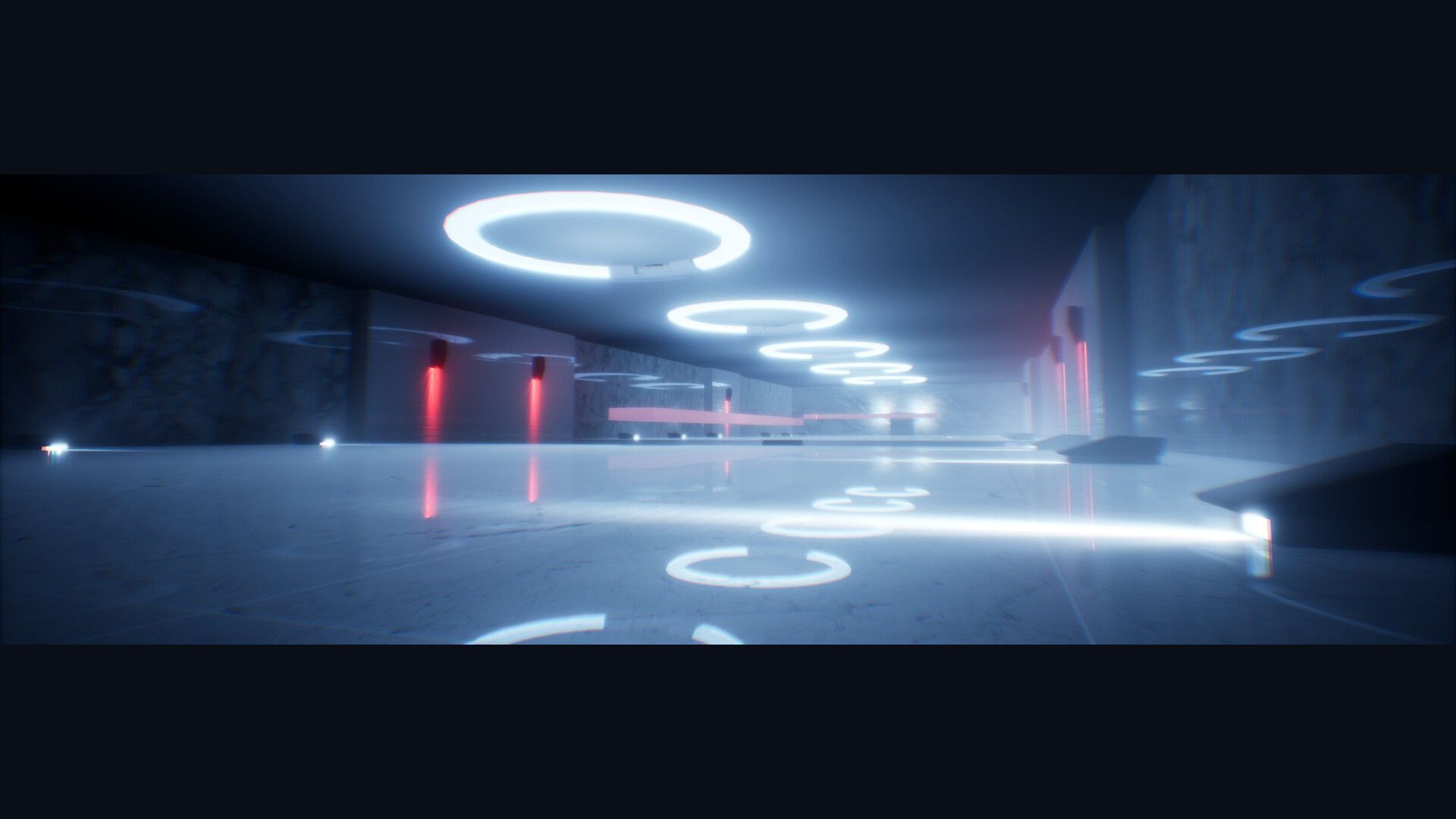
Forget illuminating dark corners. This South Korean indie puzzler lets you rewrite the laws of physics with a torch, and frankly, Isaac Newton would be absolutely furious.
GameForce Asia | October 23, 2026
Developer: [Lightersgames](https://www.lightersgames.com/)
Publisher: Game Source Entertainment
Genre: First-Person Puzzle Adventure
Platforms: PC, PlayStation 5
Release Date: October 14, 2026
Price: US$19.99
Review basis: Research-based assessment informed by official game materials, technical patch notes, and community playtest analysis.
GFA METER: 85% – STRONG
Who Needs Physics Anyway?
There are two types of people in this world. Those who encounter a locked door and look for a key, and those who encounter a locked door and start wondering whether the door really needs to exist in three dimensions. THANKS, LIGHT. is very much a game for the second group, and it makes a surprisingly convincing argument that most of life's problems could be solved by pointing a flashlight at them.
Developed by South Korean indie studio [Lightersgames](https://www.lightersgames.com/), THANKS, LIGHT. is a first-person puzzle adventure in which light doesn't merely illuminate objects. It gives them mass, volume and physical properties. Turn the light off and those same objects can flatten into two-dimensional shapes, essentially telling gravity, collision detection and several centuries of established science to take the afternoon off.
It's a wonderfully ridiculous premise, but also an exceptionally clever one. While most modern games are busy giving players seventeen different assault rifles and a battle pass, Lightersgames hands you a flashlight and asks whether you're intelligent enough to operate it. The answer, judging by the increasingly elaborate puzzle mechanics, may be rather embarrassing for some of us.
Portal Called. It Wants Its Brain Cells Back.
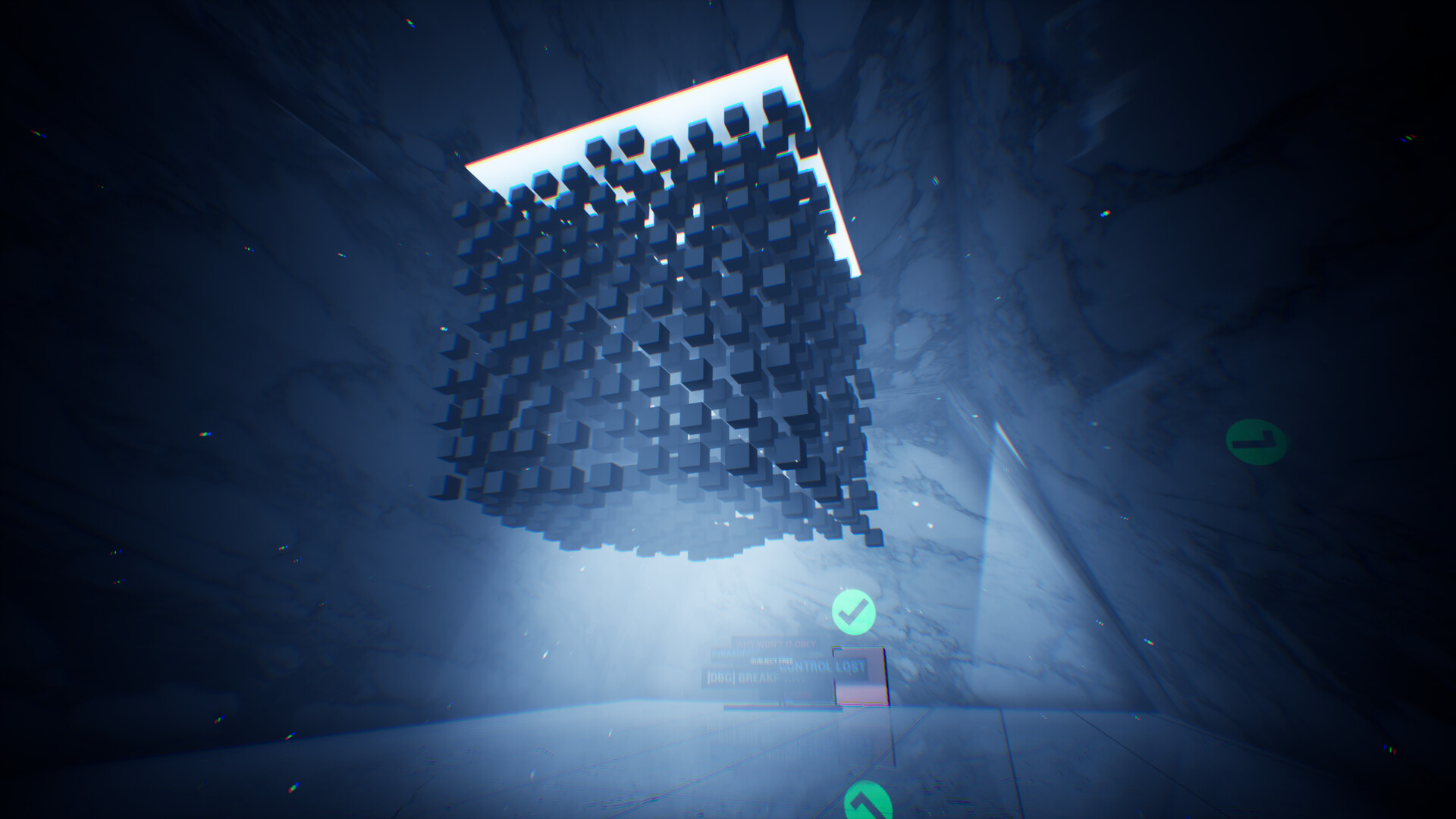
The basic idea is easy enough to understand. Shine your light at a flat shape and it becomes a physical object. A square can transform into a staircase, a silhouette can become a substantial obstacle, and a previously meaningless geometric outline suddenly has enough physical presence to support your body weight.
Remove the light, however, and things get considerably more interesting. Solid objects lose their volume, barriers cease to obstruct movement, and something that once behaved like a perfectly respectable piece of furniture can become little more than a drawing.
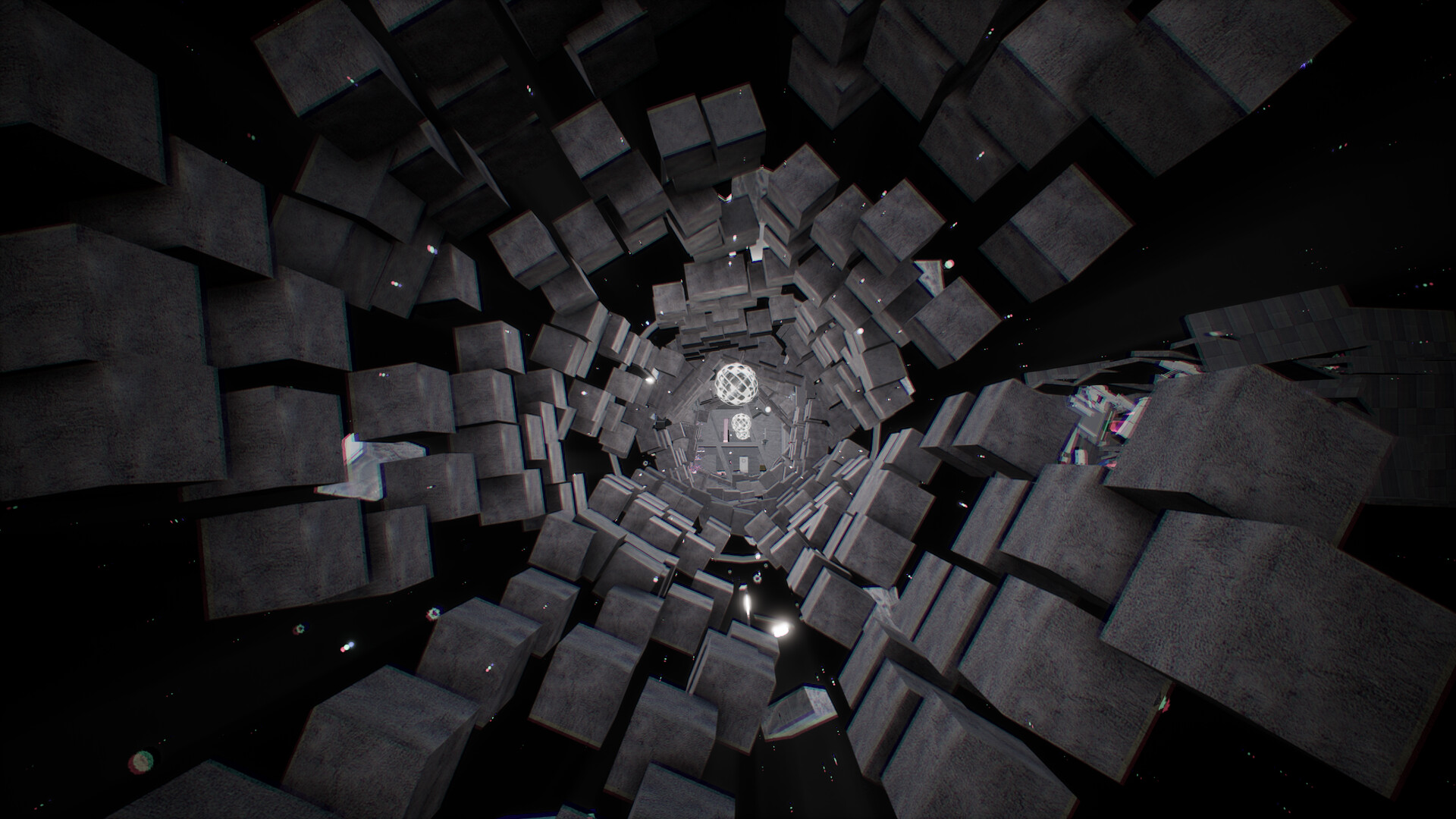
The trick is learning to stop thinking about objects as permanent fixtures. A wall is not necessarily a wall. A staircase is not necessarily a staircase. Even a ball is only a ball until somebody decides that circles should no longer have ambitions beyond their own dimensions.
It's an idea that immediately recalls Portal, Superliminal and Viewfinder, although THANKS, LIGHT. has enough mechanical individuality to avoid feeling like a student project assembled from Valve's discarded homework. Where Portal uses spatial connections and Viewfinder manipulates perspective through photographs, THANKS, LIGHT. makes illumination itself responsible for physical existence.
The possibilities become considerably more entertaining when mirrors, lenses and object merging enter the equation. Mirrors duplicate, lenses resize and merging combines forms, giving the developers five principal mechanics to mix together across more than sixty stages and three chapters.
This is also where the biggest question surrounding the game's design emerges. A puzzle involving one unfamiliar rule can feel wonderfully inventive. A puzzle involving five rules, three objects and a geometric relationship you haven't considered since secondary school can become considerably less friendly. The difference between genius and frustration often comes down to how clearly a game communicates its own logic.
THANKS, LIGHT. has a strong enough underlying concept to make those combinations exciting, although players with a low tolerance for experimentation may occasionally find themselves wishing they could flatten the puzzle designer instead.
Welcome to the World's Most Unhelpful Art Gallery
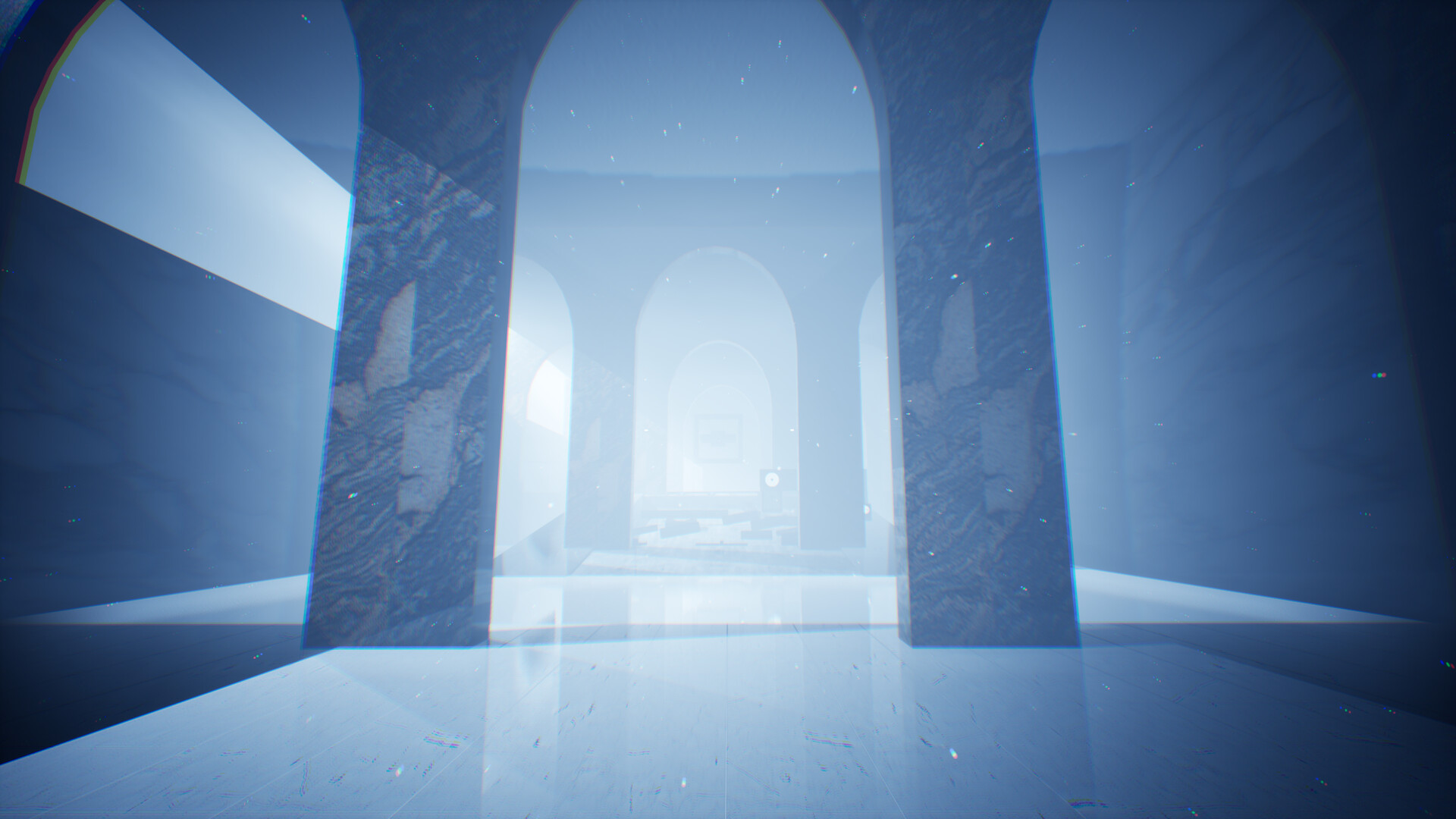
Visually, THANKS, LIGHT. resembles what might happen if a modern art museum, an expensive architecture firm and a particularly disturbed mathematics professor decided to build a holiday resort together.
The environments favour stark geometry, marble surfaces, imposing structures and carefully controlled lighting. They are sterile, mysterious and occasionally unsettling, offering the sort of atmosphere that makes you suspect the building's management has several unpleasant secrets buried beneath the reception desk.
That suspicion is not entirely unreasonable. The game's mysterious Administrator supposedly presides over a perfect world, which is always reassuring because fictional characters who describe their creations as perfect have such an excellent track record of being completely trustworthy.
The minimalist aesthetic serves an important practical purpose. Because shadows and object silhouettes are fundamental to solving puzzles, the environments need to make shapes readable without overwhelming players with unnecessary decoration. THANKS, LIGHT. understands that a visually interesting room is not necessarily one containing twelve thousand individually rendered coffee cups.
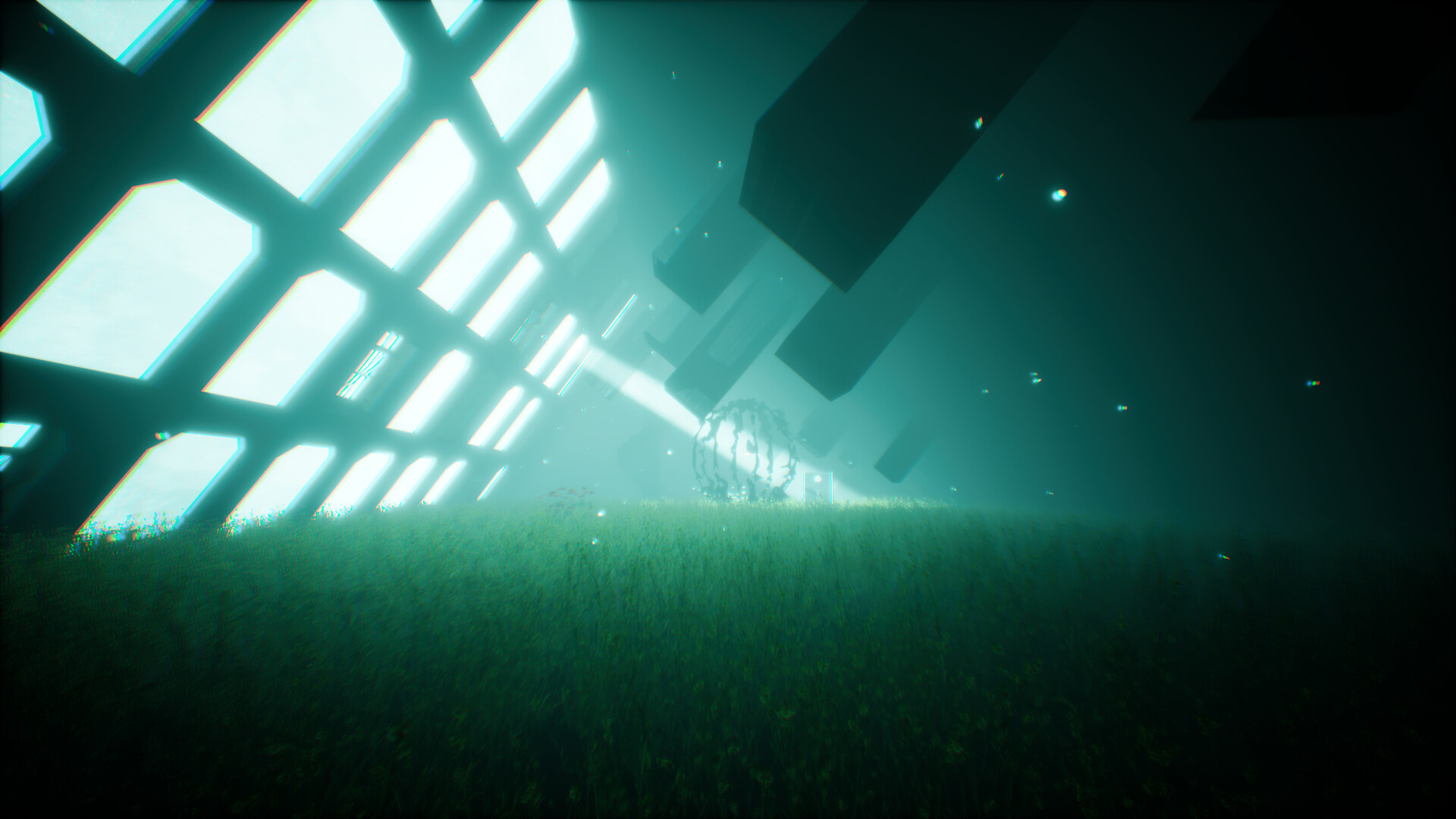
The game's chapter progression also brings changes in architectural style, helping distinguish the different stages of its increasingly strange world. There is an unmistakable indie production sensibility here: fewer assets than a blockbuster, perhaps, but a much clearer idea of what those assets are supposed to achieve.
It is the sort of art direction that deserves credit for having an actual identity. Too many independent games attempt to compensate for limited budgets by throwing every available visual effect onto the screen. Lightersgames has chosen the opposite approach, and the result is a striking environment where the geometry itself gets to be the star.
Five Mechanics, Sixty Stages and One Increasingly Overworked Brain
The three-chapter structure gives THANKS, LIGHT. an advertised campaign of more than six hours, although the actual time investment will inevitably depend on your ability to recognise spatial relationships before your patience files a formal complaint.
The appeal lies in how the mechanics build on one another. Illumination and absorption establish the basic rules, while duplication, resizing and merging broaden the possibilities. Instead of simply introducing an unrelated gimmick every few stages, the game focuses on combinations of established abilities.
That is a particularly sensible philosophy for a puzzle adventure. The most satisfying challenge is rarely the one that introduces an entirely new mechanic at the last moment. It's the one that asks you to use something familiar in a way you hadn't previously considered, ideally producing that lovely little burst of intellectual satisfaction usually reserved for discovering money in an old jacket.
Of course, this also means THANKS, LIGHT. is unlikely to appeal to everybody. Anyone hoping for explosive combat, elaborate character progression or a lengthy cinematic campaign should probably look elsewhere. There are no indications that this is secretly an open-world action RPG, and your flashlight is not going to unlock a legendary assault-rifle attachment.
At $19.99, the game's appeal rests primarily on its puzzle design and the novelty of its transformations. That makes the free demo particularly valuable. With a concept this unusual, being able to determine whether your brain appreciates the experience before purchasing the full game is a welcome luxury.
A Few Shadows on an Otherwise Bright Idea
THANKS, LIGHT. also arrives with some practical concerns. The developers have already issued post-launch fixes addressing problems with object interactions, collision behaviour, reset positions and particular puzzle sequences. Those are exactly the sorts of issues that can cause trouble in a game where understanding the physical rules is the whole point.
Nothing undermines a puzzle faster than suspecting you have finally discovered the correct answer, only for an object to behave as though somebody forgot to inform the physics engine. Games can be intentionally confusing; they should not be accidentally incomprehensible.
To Lightersgames' credit, the early updates demonstrate an active response to reported problems. Nevertheless, technical consistency deserves scrutiny, especially as later stages combine more complicated interactions.
Another possible sticking point is longevity. The advertised six-plus-hour campaign is perfectly respectable for a tightly designed puzzle adventure, but buyers expecting a sprawling twenty-hour epic may find the experience comparatively compact.
There is also a fine line between a challenge that makes you feel clever and one that makes you question whether the developers are deliberately trying to ruin your weekend. THANKS, LIGHT.'s reliance on abstract spatial reasoning means that line will vary considerably between players.
And while the minimalist visual presentation is distinctive, some may find its austere geometric environments less immediately appealing than the more colourful worlds offered by other contemporary puzzle adventures.
Five Developers, One Very Bright Idea
Perhaps the most impressive thing about THANKS, LIGHT. is that it comes from a tiny South Korean development team rather than a studio with several hundred employees and a marketing budget large enough to purchase a small island.
Lightersgames has built its project around a central mechanic that is immediately understandable yet offers substantial room for experimentation. That's a difficult balance to achieve, particularly when the game also incorporates a mysterious narrative, multiple interacting systems and several distinct environmental themes.
The game also supports a broad range of languages, including Indonesian, Thai, Japanese, Korean, Chinese and numerous European languages. That international approach is encouraging for an emerging Asian studio, although the developer's disclosed use of AI-assisted localisation in some languages means translation consistency deserves attention.
More importantly, THANKS, LIGHT. demonstrates something the independent gaming scene occasionally needs reminding of: originality does not necessarily require inventing a new genre. Sometimes it simply requires looking at something familiar and asking what would happen if it behaved differently.
In this case, the familiar object is a flashlight, and the answer appears to involve making Euclidean geometry deeply uncomfortable.
The GameForce Asia Verdict
THANKS, LIGHT. is exactly the kind of eccentric indie production that deserves attention. It has a genuinely distinctive premise, a striking visual identity and a puzzle system built around ideas rather than sheer content volume.
The dimensional transformations provide a compelling foundation, while mirrors, lenses and merging create opportunities for increasingly elaborate spatial challenges. Its atmospheric environments and mysterious narrative framing give those puzzles a welcome sense of place rather than presenting them as disconnected laboratory exercises.
The potential drawbacks are equally clear. The unusual mechanics demand precise implementation, the minimalist environments may not appeal to everyone, and documented launch issues demonstrate why the game's technical behaviour deserves particular attention.
Nevertheless, there is something wonderfully refreshing about a title that doesn't try to impress players with hundreds of weapons, endless collectibles or a skill tree that requires a university degree to navigate. THANKS, LIGHT. offers an unusual idea and explores what can happen when that idea is allowed to reshape an entire game.
It also provides a useful reminder that video games are fundamentally about making impossible things possible. In real life, shining a flashlight at a staircase does absolutely nothing beyond helping you avoid falling down it. Here, the staircase might not even exist until you switch the damn thing on.
And if that isn't a reasonable argument for giving this peculiar little South Korean puzzler some attention, we don't know what is.
GFA METER — FINAL EDITORIAL ASSESSMENT
| Category | Score |
|---|---|
| Graphics | 87% |
| Sound | 79% |
| Gameplay | 89% |
| Fun Factor | 85% |
| Overall GFA Score | 85% |
GFA METER: STRONG – 85/100
The Good: Wonderfully inventive light-and-shadow mechanics, five complementary puzzle systems, memorable minimalist art direction, impressive ambition from a small development team and a free demo that lets players experience its unusual concept before buying.
The Bad: Potentially frustrating spatial manipulation, a fairly compact advertised campaign, austere environments that won't suit every taste and documented launch issues affecting puzzle interactions.
The Ugly: Somewhere, Isaac Newton is spinning in his grave. Unfortunately, somebody absorbed the light, so he has now become a completely motionless two-dimensional circle.
Final Verdict: THANKS, LIGHT. is a clever, ambitious and delightfully unconventional first-person puzzler built around a mechanic with genuine creative potential. Its dimensional trickery and striking atmosphere make it particularly appealing to fans of Portal, Superliminal and Viewfinder, although technical polish and the execution of its increasingly elaborate puzzles remain important considerations.
GFA Recommendation: STRONG – Recommended for puzzle enthusiasts, experimental indie fans and anyone who has ever wanted to solve an architectural problem by switching off the laws of physics.
Buy or play the demo:
- [THANKS, LIGHT. on Steam](https://store.steampowered.com/app/2544740/Thanks_Light/)
- [Official Website: Lightersgames](https://www.lightersgames.com/)
- Check out more [GameForce Asia Reviews](/reviews) or visit the curated [GFA Shop](/shop).
Editorial disclosure: This is a research-based assessment, not a hands-on playtest. The GFA Meter scores are editorial estimates based on available game information.
Screenshots