Nidhogg
 GFA METERSTRONG
.jpg)
**Nidhogg** is what happens when two fencing stickmen settle a dispute the old-fashioned way: by stabbing each other, sprinting in opposite directions, and eventually offering the winner as lunch to a giant flying worm. It is elegant. It is stupid. It is brilliant. It is also probably responsible for several real-life friendship injuries involving controllers.
Released in **2014** by **Messhof**, Nidhogg is described on [Steam](https://store.steampowered.com/app/94400/Nidhogg/) as an “award-winning fencing tug-of-war,” which is exactly right. This is not a normal fighting game where one health bar drops and the round ends. Instead, every duel is a back-and-forth struggle for territory. Kill your opponent and you earn the right-of-way, meaning you can run toward your goal. But your opponent respawns ahead of you, so the match becomes a frantic loop of fencing, chasing, panicking, and yelling “NO, NO, NO” at the screen like a sports commentator having a small breakdown.
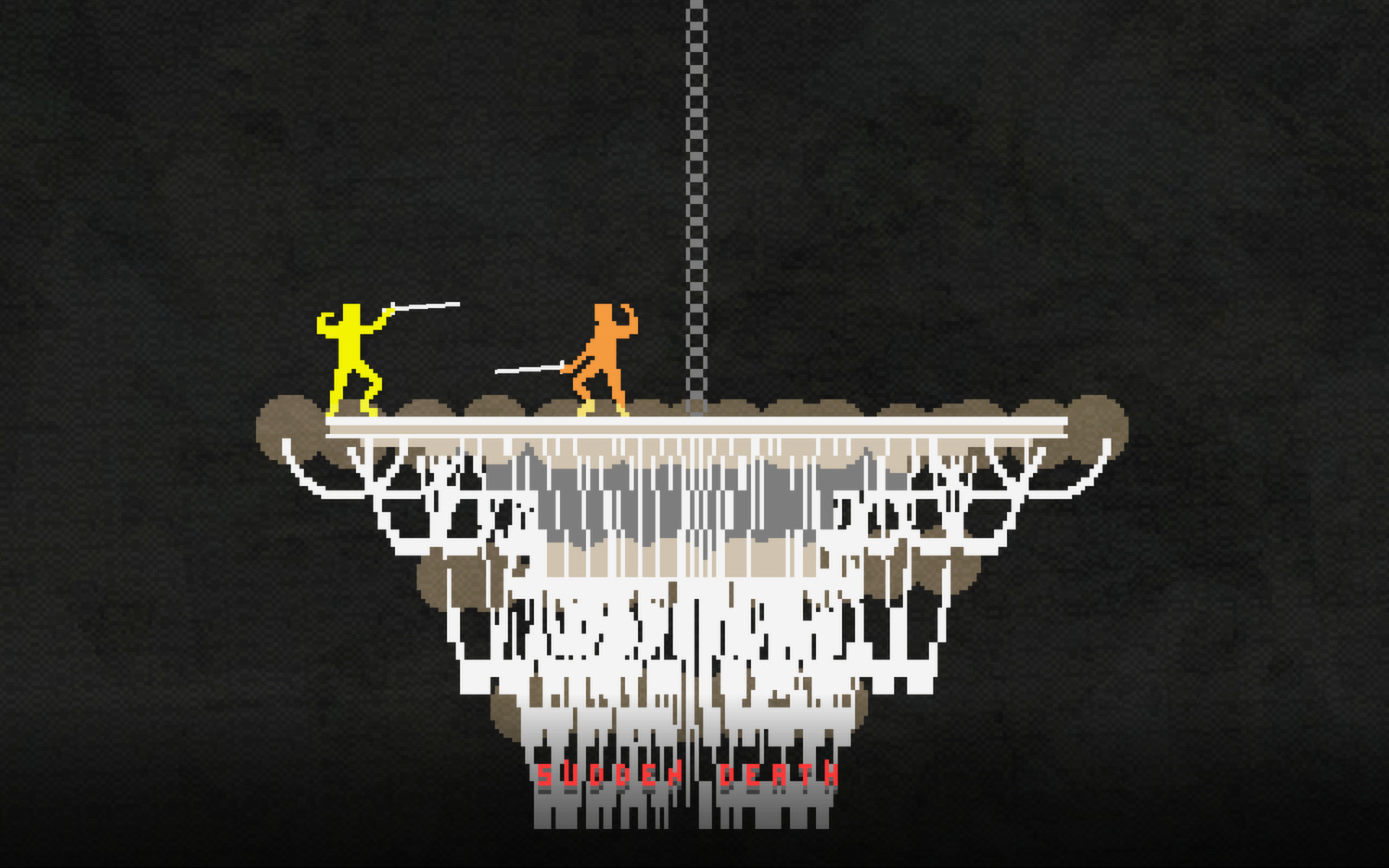
The controls are simple, but the mind games are excellent. While armed, you can lunge, parry, change stance, and even throw your sword like a horrible little goblin. When unarmed, you are not helpless either: punches, sweep kicks, dive kicks, rolls, and wall jumps all give you ways to survive, counter, or humiliate someone who thought they had already won. That is the key to Nidhogg: the advantage is always temporary. You can go from unstoppable champion to floor decoration in half a second.
The level design is deceptively smart. Each arena has different chokepoints and formations, so the game is not just about who reacts faster. It is about spacing, baiting, timing, and knowing when to fight versus when to run like a coward with excellent strategic instincts. The best players are not just good at stabbing. They are good at making the other player *think* they are about to stab, then doing something rude, unexpected, and technically legal.
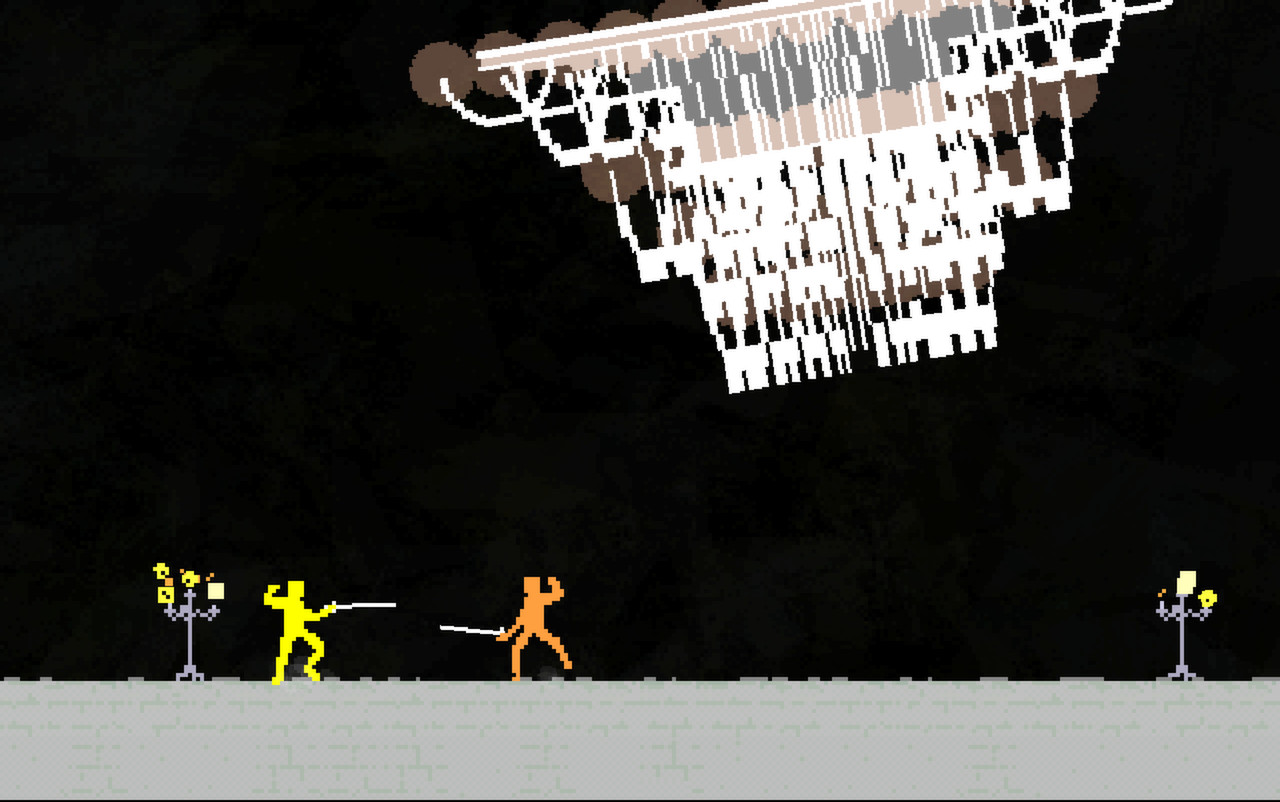
As a local multiplayer game, Nidhogg is close to perfect. Steam supports both **online PvP** and **shared/split-screen PvP**, plus Remote Play Together, but the real magic is still two people in the same room, shouting at a minimalist sword duel as if it were the World Cup final. It is one of those rare games where spectators understand what is happening instantly. Even someone who has never played can look at the screen and understand: “Ah yes, the yellow man must reach the worm. Naturally.”
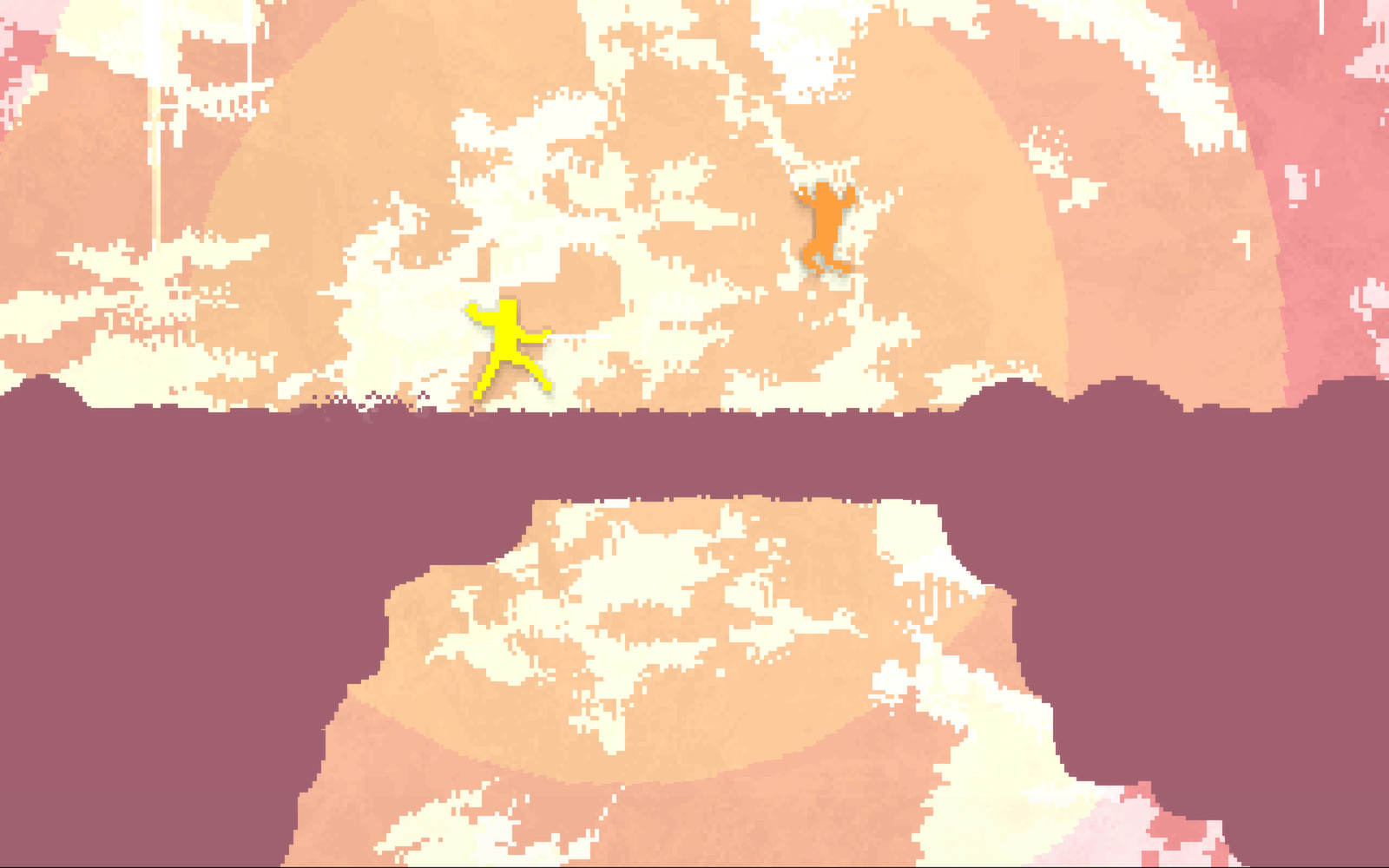
The presentation is extremely minimal, and that will not work for everyone. Visually, Nidhogg is all sharp colors, simple shapes, and strange abstraction. It is not “beautiful” in a traditional sense, but it is very readable, very distinctive, and it lets the movement and combat do the talking. The soundtrack also deserves praise: the Steam page quotes critics praising Daedelus’s moody electronic music, and it gives the whole thing a strange, tense, almost ritualistic energy.
The honest downside is content breadth. Nidhogg is narrow by design. It is not a huge game full of modes, unlocks, character builds, campaign systems, and cosmetic nonsense. It is a pure competitive duel machine. If you want a big single-player package, you will bounce off quickly. If you want a party-fighting classic that creates immediate drama from almost nothing, it is still fantastic.
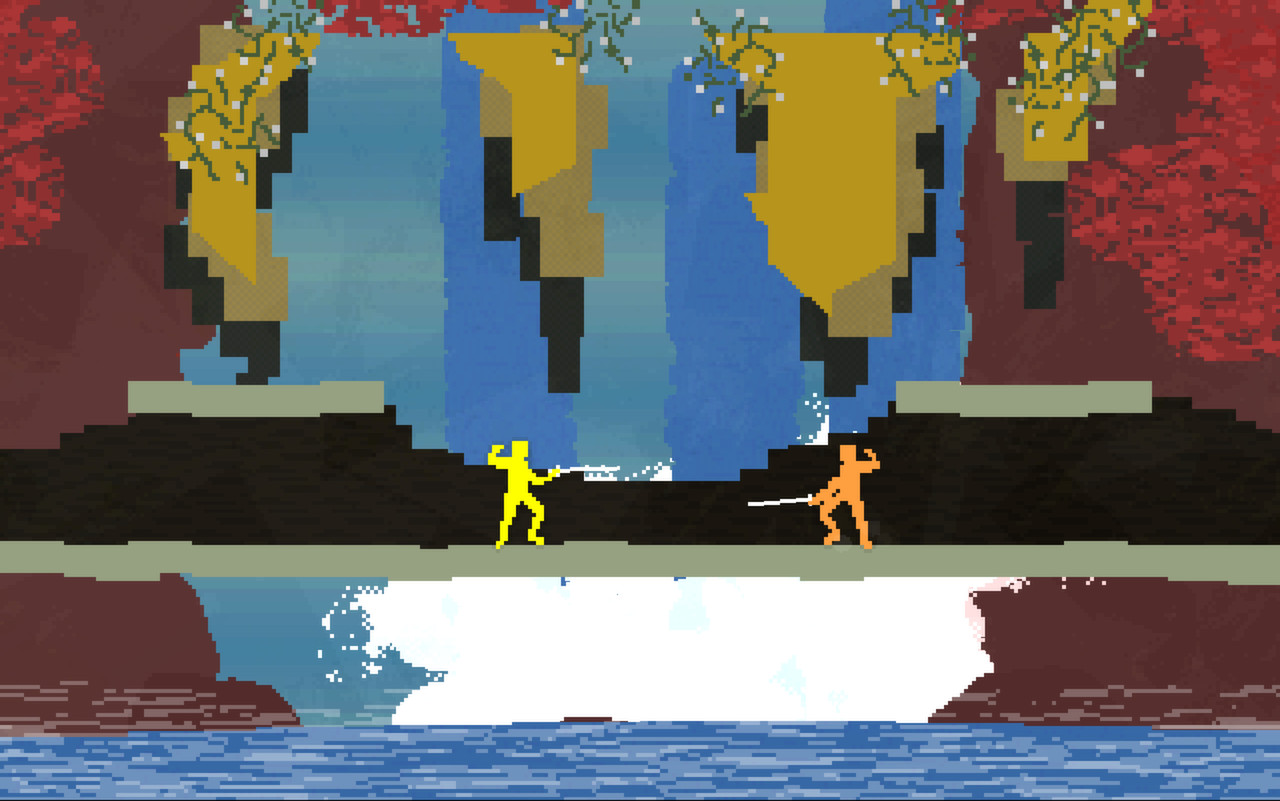
The reputation backs that up. Steam currently shows **Very Positive** English reviews, with 91% positive from more than 4,000 English user reviews, and the game carries a **Metacritic score of 81**. It also picked up major indie recognition, including IndieCade and IGF awards/nominations.
### GameForceAsia-style score
* **Graphics:** 80% * **Sound:** 88% * **Gameplay:** 92% * **Fun:** 94%
**Overall score: 88.5%**
**Verdict:** A minimalist indie multiplayer classic: simple to understand, hard to master, hilarious under pressure, and still one of the purest “one more match” games ever made. Just remember: winning is temporary. The worm is eternal.
Screenshots