PAPERHEAD Review – Cardboard Carnage, Magical Pencils and the World's Worst Arts and Crafts Project
 GFA METERSTRONG
.jpg)
*What happens when Doom, a stationery cupboard and a particularly disturbed kindergarten teacher have a baby? Apparently, PAPERHEAD.*
**GameForce Asia | October 11, 2026**
**Developer:** Paperhead te4m **Publisher:** HypeTrain Digital **Genre:** Retro FPS / Horror / Action **Platforms:** PC, Xbox Series X|S **Release Date:** October 9, 2026 **Price:** US$19.99 (regional pricing varies) **Review basis:** Research-based editorial assessment informed by official game materials and independent hands-on coverage.
**GFA METER: 86% — STRONG**
## Arts and Crafts Have Never Been This Traumatic
There was a time when cardboard was an innocent material. It transported refrigerators, housed unwanted Christmas presents and occasionally became a spaceship when your parents couldn't afford actual toys. Nobody looked at a cardboard box and wondered whether it contained a screaming biological nightmare requiring immediate shotgun treatment. Those were simpler times. PAPERHEAD, developed by Paperhead te4m and published by HypeTrain Digital, would very much like to ruin them.
This gloriously deranged indie shooter takes the familiar foundations of a 1990s first-person shooter, adds the kind of horror normally associated with exploring an abandoned psychiatric hospital at three in the morning, and wraps everything in a deceptively adorable cardboard aesthetic. The result is a world where the walls resemble something your nephew made for a school project, the inhabitants are extremely unhappy to see you, and practically everything appears to be violating several international packaging regulations.
The central mystery is brilliantly straightforward: why does cardboard bleed? It's a perfectly reasonable question, although presumably one that should have been raised during the facility's first health and safety inspection, rather than after the entire workforce became a collection of murderous paper monstrosities.
## Doom Meets the Office Supplies Department
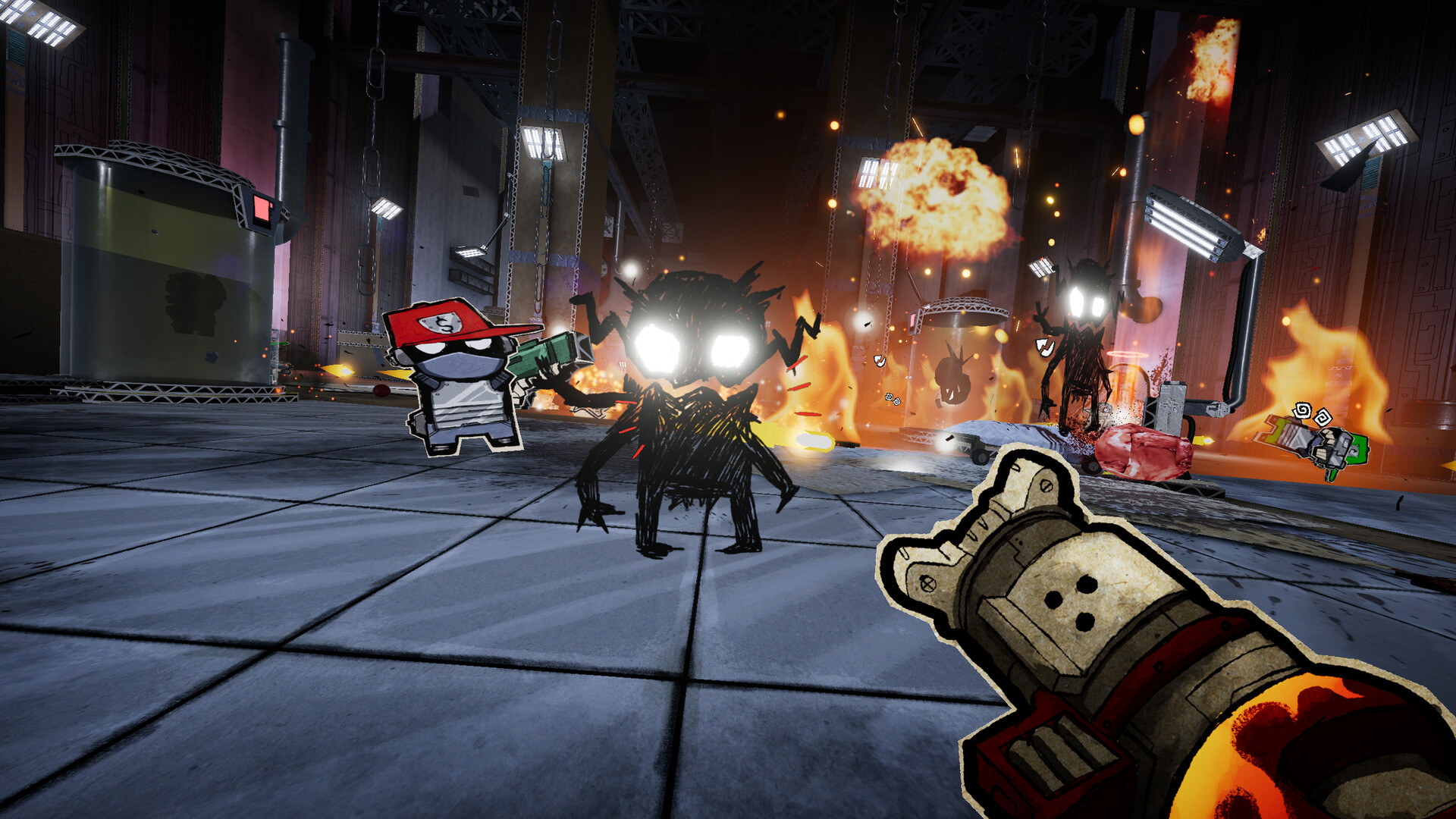
PAPERHEAD belongs to the increasingly crowded family of retro-inspired shooters affectionately called boomer shooters, a genre that celebrates the days when ammunition was plentiful, health could be recovered by picking things up, and nobody expected you to spend twenty minutes watching a cinematic cutscene about a soldier's troubled relationship with his father.
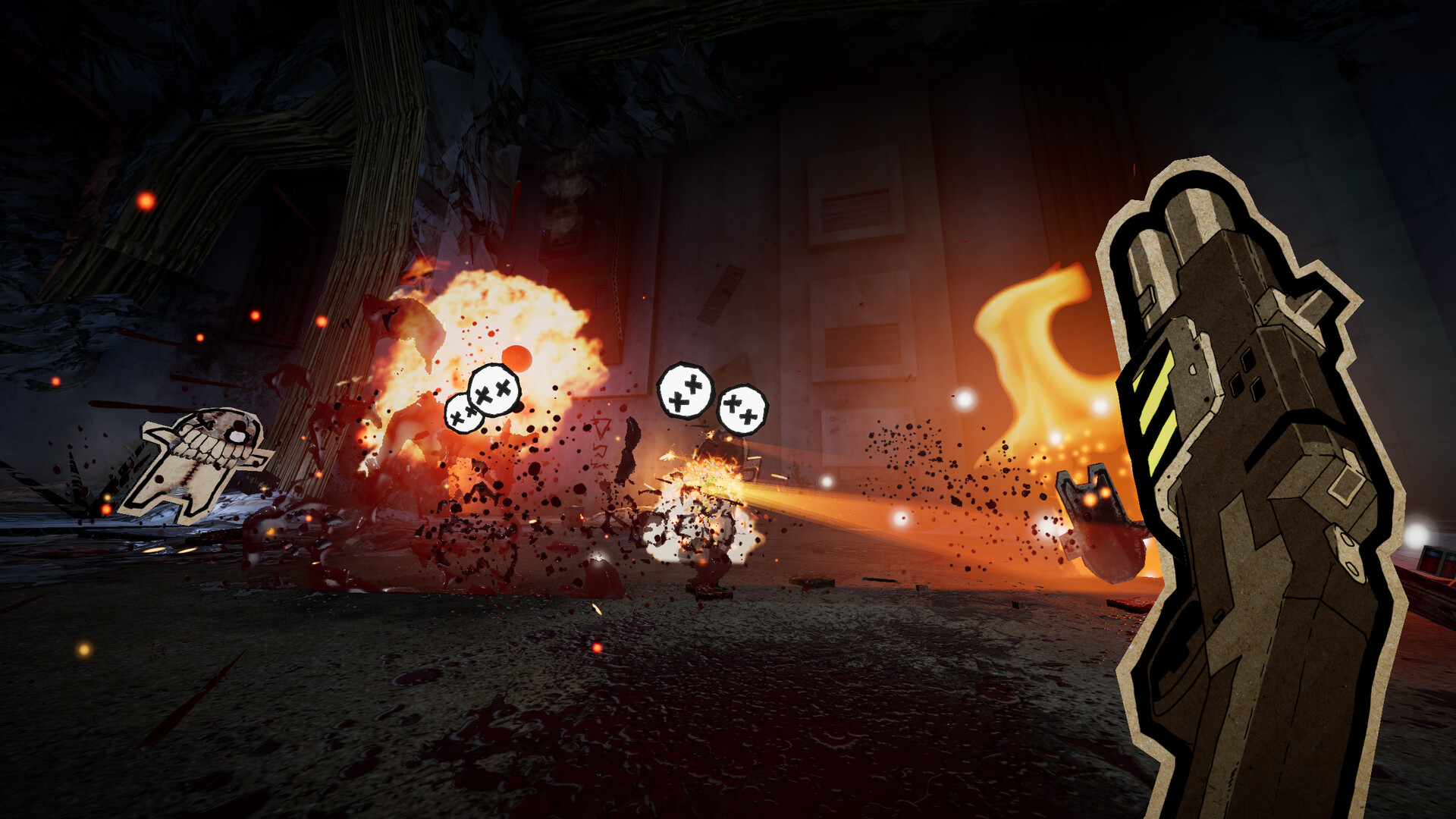
Here, the philosophy is equally uncomplicated: keep moving, keep shooting, and preferably ensure that whatever is chasing you has fewer functioning body parts by the end of the encounter. The game's combat system combines conventional firearms with highly aggressive movement and environmental destruction. Players can launch enemies into the air, boot explosive barrels into crowds, bounce off unfortunate creatures and generally treat the research facility like an exceptionally violent indoor playground.
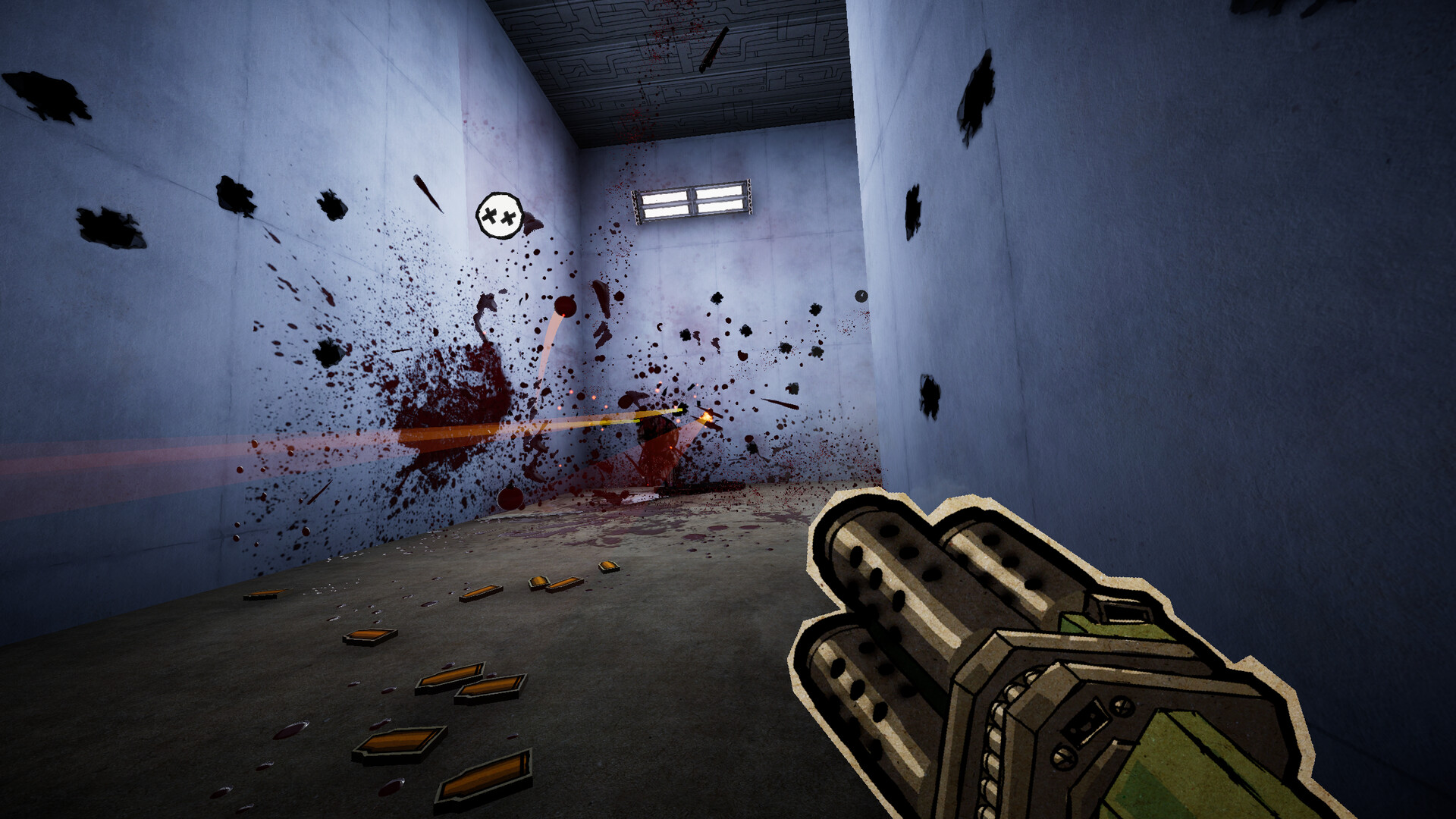
The arsenal extends beyond the obligatory shotgun to pistols, heavier automatic weapons, rocket launchers, a railgun and more exotic instruments of destruction. Different weapons offer alternate firing options, while enemies vary in their aggression and abilities. The design encourages players to prioritise dangerous targets rather than simply holding the trigger and hoping that everyone eventually stops moving.
Movement is just as important as marksmanship. Sliding, double-jumping and bunny-hopping give encounters a distinctly acrobatic character, with considerable emphasis on maintaining momentum. Fans of ULTRAKILL and similarly hyperactive shooters should recognise the philosophy immediately. Standing still is discouraged, largely because the local cardboard population appears eager to turn you into something requiring a death certificate.
Independent hands-on impressions suggest this is where PAPERHEAD performs particularly well. The weapons reportedly have satisfying impact, the enemy encounters reward aggression, and the combination of movement and crowd control gives combat a satisfying rhythm. That doesn't necessarily reinvent the genre, but it understands why these games work. Good retro shooters make you feel like an unstoppable killing machine right up until you make one stupid mistake and discover that apparently the enemies have read the same instruction manual.
## The Pencil Is Mightier Than the Sword. The Shotgun Remains Competitive.
The game's most distinctive feature is a magical pencil, which takes the traditionally peaceful business of drawing and converts it into something considerably less suitable for children's television.
Players can sketch explosives into existence, create doors, write on walls and manipulate their surroundings using an oversized writing instrument with powers that would make most stationery manufacturers extremely nervous. The pencil can also erase enemies to recover health, transforming a familiar schoolroom tool into a rather sinister combination of weapon, medical equipment and reality-editing device.
On paper, this is a fantastic idea. Sorry, that pun was unavoidable. Unlike a conventional shooter gadget that merely produces a different-coloured explosion, the pencil promises to bridge combat, exploration and environmental interaction. There's a genuinely inventive foundation here, particularly when explosives can be created and then physically kicked into enemies.
Unfortunately, this is also where some of the game's most interesting criticism emerges. Independent hands-on coverage suggests that the pencil's potential isn't explored as deeply as the premise deserves. Drawing interactions are reportedly restricted to relatively specific situations rather than transforming the entire adventure into a creative playground.
That's a meaningful reservation. When your most original mechanic involves rewriting reality with a pencil, players can reasonably expect rather more than occasional opportunities to redecorate a wall with explosives. PAPERHEAD appears to have invented the world's most dangerous stationery item, then occasionally remembers that it also has several perfectly serviceable guns.
The concept remains wonderfully inventive, but it's also the area where a more ambitious sequel could potentially go completely off the rails, preferably while allowing players to draw those rails themselves.
## A Beautifully Horrible Cardboard Nightmare
Visually, PAPERHEAD has something that money, expensive graphics engines and seventeen different ray-tracing settings cannot automatically provide: genuine personality.
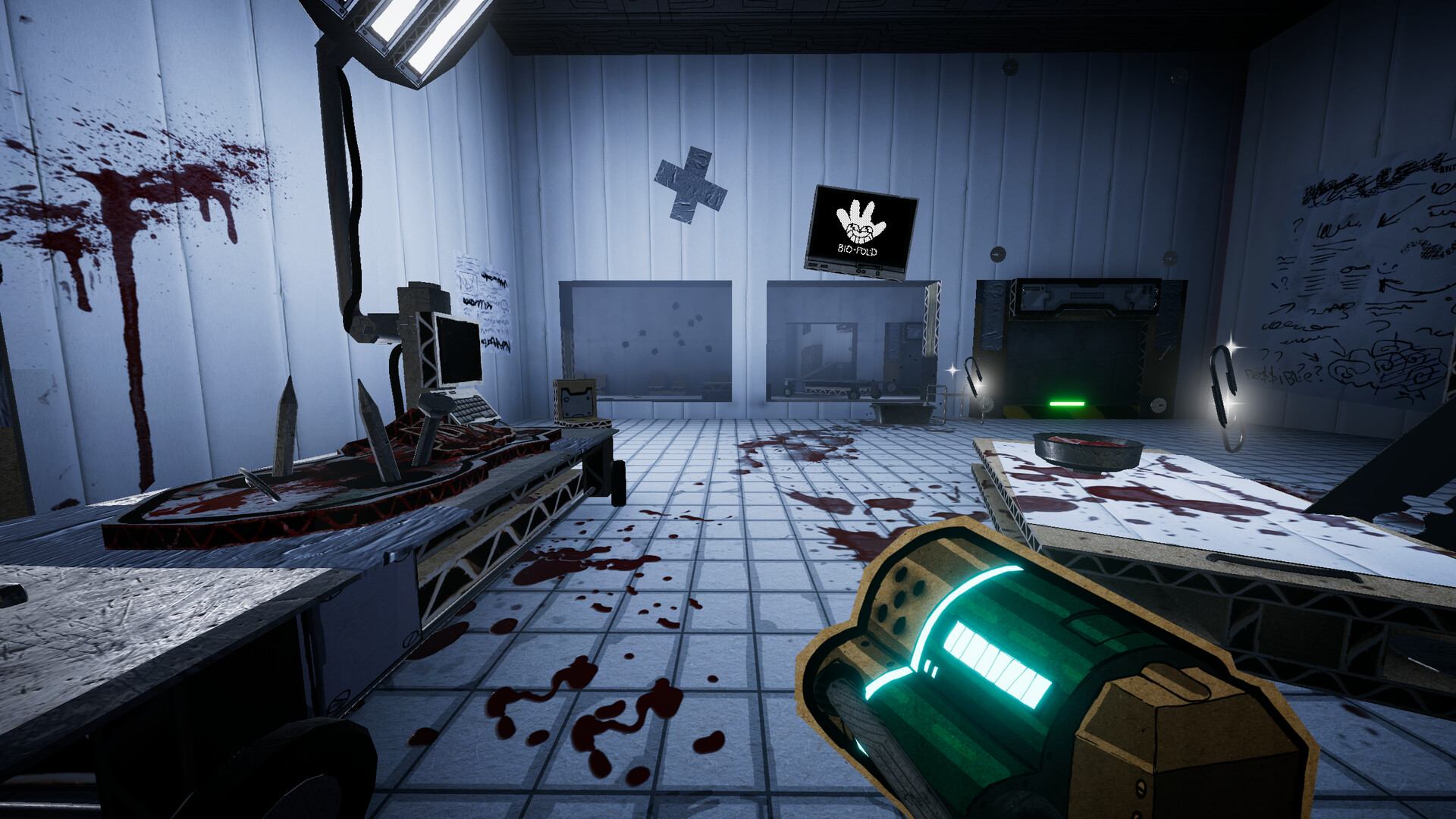
Its environments are constructed around cardboard surfaces, corrugated edges, crude illustrations and strange paper creatures, initially suggesting a homemade theatrical production. Unfortunately, someone appears to have invited the entire cast of a particularly nasty horror film, and the results are neither family-friendly nor easily washable.
As the adventure progresses, the contrast between artificial materials and biological horror becomes increasingly important. Flesh, blood and decaying organic forms intrude upon the supposedly harmless paper world, transforming what might have been a quirky visual gimmick into something substantially more unsettling.
The setting ranges from industrial corridors and research laboratories to factories, villages and other increasingly bizarre locations, maintaining the game's handmade identity even when the scenery becomes thoroughly unpleasant. The contrast works because cardboard is fundamentally associated with harmlessness and fragility. PAPERHEAD takes those associations and beats them repeatedly with a heavy object.
The most appealing environments aren't necessarily the biggest or most elaborate. They're the ones where cardboard construction collides with deeply unpleasant biological material, creating a visual language that genuinely belongs to this game rather than another entry in the endless parade of dark industrial corridors.
There's an important distinction between technical sophistication and art direction. PAPERHEAD isn't competing with the latest blockbuster for photorealistic pores, reflections or the ability to see every individual hair on a protagonist's nose. Instead, it establishes a coherent visual identity that communicates personality immediately. That's a substantial achievement for an independent production.
**Graphics: 89%**
The distinctive art direction, disturbing cardboard-and-flesh environments and recognisable enemy designs are the major strengths. Some conventional industrial spaces are less memorable, but the overall visual identity is excellent.
## Industrial Music for Industrial-Scale Cardboard Disposal
If the visual presentation is strange, the audio is apparently determined to ensure that nobody accidentally mistakes this for a relaxing craft simulator.
Composer Joonas Turner provides the soundtrack, blending aggressive industrial and metal-influenced compositions with atmospheric passages that suit the game's unsettling horror setting. It's an inspired direction for a shooter that alternates between frantic violence and exploring locations that very clearly haven't passed a workplace inspection in several decades.
The soundtrack's appeal is not simply that loud music accompanies shooting. Good action-game audio reinforces momentum, gives encounters character and knows when to retreat so that environmental sound can create tension. PAPERHEAD's mixture of pounding combat music and sinister ambience appears well suited to those contrasting demands.
The music also helps distinguish the game's personality. Cardboard monsters and magical pencils could easily have pushed the entire experience into disposable novelty territory, but the soundtrack treats the horror and violence seriously enough to give the absurdity genuine weight.
**Sound: 88%**
An energetic industrial soundtrack, atmospheric horror ambience and aggressive combat presentation make audio one of the game's standout elements. The sound design supports the action without sacrificing the unsettling mood.
## Not Every Piece of Cardboard Deserves a Gold Star
For all its creativity, PAPERHEAD isn't immune to some familiar indie action-game problems.
One concern emerging from independent critical coverage is pacing. The opening premise is immediately interesting, and the combat mechanics provide plenty of variety, but the adventure reportedly becomes somewhat stretched during its latter half. The conclusion has also been criticised for lacking the impact that its strange central mystery seems to promise.
That matters because horror depends on more than interesting monsters and atmospheric lighting. A compelling mystery needs escalation and payoff. If the answer to why your stationery is bleeding doesn't ultimately justify the journey, some players may feel they've attended an extremely expensive arts and crafts seminar with an unusually high mortality rate.
Character progression is another potential sticking point. PAPERHEAD includes a skill system supported by collectible resources, with certain improvements linked to hidden rewards. Normal paperclips can be used for practical supplies, while rarer golden paperclips are tied to skill progression. The problem is that hiding meaningful character development behind secret-hunting can potentially punish players who would rather concentrate on the action.
Exploration should reward curiosity, not feel like mandatory homework assigned by a deranged office manager. There's nothing wrong with hiding powerful equipment or optional bonuses in difficult-to-find locations, but tying progression too closely to obscure collectibles can make an otherwise exhilarating shooter feel unnecessarily fussy.
Default keyboard bindings have also attracted criticism, with remapping recommended in hands-on coverage. That's hardly catastrophic, but in a game demanding rapid movement and constant weapon juggling, controls need to become second nature rather than resemble the entrance examination for a commercial airline pilot.
Then there's the issue of the magical pencil. For all the attention it receives in the game's identity, the limited application of its more creative functions represents a missed opportunity. The firearms and movement reportedly carry the action admirably, but a central mechanic this unusual deserves to evolve substantially throughout the adventure.
These shortcomings don't erase the game's strengths. They do, however, suggest a title whose ideas occasionally move faster than its refinement.
**Gameplay: 82%**
Fast movement, strong weapon variety, aggressive enemies and entertaining combat provide a solid foundation. However, the underused pencil mechanic, progression decisions, uneven later pacing and awkward default controls prevent the design from reaching its full potential.
## Eight Hours of Questionable Stationery Decisions
PAPERHEAD contains 18 chapters, with an initial playthrough estimated at roughly five to eight hours depending on difficulty and exploration. Completionists have additional incentives to return, including performance targets, secrets and ranking challenges. It's a sensible structure for a fast-paced shooter, where replaying favourite encounters and improving one's performance can be considerably more rewarding than simply extending the campaign with repetitive filler.
At its standard US$19.99 price, the game occupies a reasonable position in the independent shooter market. Regional pricing makes it worth checking the local storefront in countries such as Indonesia, Malaysia, Thailand and the Philippines rather than assuming that American pricing applies everywhere.
Its early Steam reception has been notably enthusiastic, reinforcing the impression that the game has found an audience appreciative of its unusual presentation and energetic combat. Enthusiastic early buyers aren't proof of perfection, of course. The internet has also enthusiastically reviewed kitchen appliances, novelty socks and a banana taped to a wall.
What PAPERHEAD seems to understand better than many considerably more expensive productions is that fun doesn't necessarily require endless content. A distinctive setting, satisfying combat systems and memorable atmosphere can be enough to create an experience worth recommending, even when the underlying mechanics aren't fully developed.
The danger is repetition. A campaign built around relentless action must continually introduce enough enemy variety, environmental variation and mechanical surprises to maintain excitement. Reports of a less compelling latter half suggest PAPERHEAD doesn't completely escape that problem.
Still, the combination of violent slapstick, creepy exploration and aggressive movement gives the game considerable entertainment value. Those expecting a conventional military shooter, a leisurely walking simulator or a relaxing evening of scrapbooking may wish to make alternative arrangements.
**Fun Factor: 85%**
The outrageous premise, energetic action and disturbing humour create a memorable package with genuine replay appeal. The campaign's reported pacing problems and missed mechanical opportunities prevent an even higher rating.
## The GameForce Asia Verdict
PAPERHEAD is precisely the sort of peculiar independent creation that deserves attention in an industry where increasingly expensive blockbuster productions sometimes struggle to offer anything more imaginative than another heavily armed man standing in front of an explosion.
Its premise is distinctive, the aesthetic has a recognisable identity, and its combination of acrobatic combat, magical pencil mechanics and grotesque cardboard horror offers something substantially stranger than the average retro shooter. The industrial soundtrack provides further character, while the emphasis on weapon variety and environmental interaction gives the action a promising mechanical foundation.
It isn't without flaws, and pretending otherwise would do the game no favours. The magical pencil should have been explored more extensively, the skill progression system appears unnecessarily dependent on collecting secrets, and the latter stages reportedly struggle to maintain the same momentum as the opening. These are meaningful criticisms rather than insignificant inconveniences, and they explain why PAPERHEAD doesn't receive a score in the nineties.
Nevertheless, the strengths comfortably outweigh the weaknesses in this editorial assessment. PAPERHEAD combines strong artistic direction with satisfying, aggressive shooting and one of the more delightfully unhinged premises in recent indie gaming.
It's the sort of game that makes you wonder how the initial pitch meeting unfolded. Presumably somebody suggested building a first-person shooter entirely out of cardboard, another person asked why the cardboard would bleed, and the entire team collectively decided that answering that question would be far more entertaining than seeking psychological assistance.
And they may well have been right.
For fans of fast-paced retro shooters and unconventional horror, PAPERHEAD looks like a particularly worthwhile addition to the library. It doesn't quite realise every one of its ideas, but it has more genuine personality than a warehouse full of generic military shooters.
Just don't confuse it with an educational game about recycling.
## GFA METER — FINAL EDITORIAL ASSESSMENT
| Category | Score | |---|---:| | Graphics | 89% | | Sound | 88% | | Gameplay | 82% | | Fun Factor | 85% | | **Overall GFA Score** | **86%** |
**GFA METER: STRONG — 86/100**
**The Good:** Fantastic cardboard horror aesthetic, satisfying high-speed combat, memorable industrial soundtrack, inventive pencil concept, entertaining enemy encounters and strong personality.
**The Bad:** Pencil mechanics aren't exploited enough, skill progression leans too heavily on hidden collectibles, default keyboard controls need adjustment, and the latter campaign reportedly loses some momentum.
**The Ugly:** Apparently, cardboard can bleed. Nobody has explained how this passed quality control.
**Final Verdict:** PAPERHEAD is a wonderfully twisted retro FPS whose personality, relentless action and excellent art direction make it stand out from the indie shooter crowd. It falls short of greatness through underdeveloped mechanics and uneven pacing, but there's a highly entertaining and distinctive game beneath all that blood-soaked cardboard.
**GFA Recommendation: STRONG — Recommended for fans of boomer shooters, fast-paced FPS combat and unconventional horror.**
*Scoring disclosure: This 86% rating is GameForce Asia's research-based editorial assessment derived from available evidence, not an independently verified hands-on playthrough. It should be revisited following direct gameplay testing.*
**Buy PAPERHEAD:** https://store.steampowered.com/app/2680280/PAPERHEAD/
**More reviews and gaming news:** https://www.gameforceasia.com
Screenshots